

Final manuscript review before publishing your romance
You’re almost there. And that matters, because “almost there” is where a lot of authors quietly stall out. They circle back into earlier stages, second‑guess the structure, start line editing scenes they already line edited, and avoid the moment of finishing by calling it “just one more pass.” A final manuscript review before publishing is how you stop that loop and actually get to done.
This is not another deep revision round.
The bones are sound, the scenes are doing their jobs, and the sentences are clean. The final manuscript review before publishing is one focused question:
Does this book read like a book now?
Not like a document you’ve been living inside for months. Like a story a romance reader picks up on a Thursday night and accidentally loses two hours to.
Your job here is to experience your manuscript as close to the way a reader will as you can manage and catch whatever small things are still getting in the way of that experience.
Read it like a reader
Before you change a single word, read the whole thing in a different format. Export it to your e‑reader or a reading app. Print it out and curl up with a pen. Change the font and spacing until the pages look unfamiliar. Do whatever you need to trick your brain out of writer‑mode, where it sees what you meant to write, and into reader‑mode, where it sees what is actually on the page.
As you go, mark lightly: a star for something that stops the flow, a question mark for anything confusing, a big red heart or exclamation point for the moments that still land the way you wanted them to.
Do not stop to fix.
Do not rewrite a single sentence.
Your only job on this pass is to notice how the book feels as a complete reading experience. Where you’re pulled forward, where you feel restless, where something works even better than you remembered, and where you feel nothing when you meant to feel something.
When you’re done, look at your marks as a whole. Not as proof the book is broken, and not as a giant to‑do list. As information. A handful of stumbles and one or two quiet patches is normal. A cluster of marks in the same chapters, or the same type of scene, is worth paying attention to in your final manuscript review before publishing.
Coherence and consistency
This is where you hunt for details readers absolutely notice and authors almost never catch in their own work, because you have lived in this story long enough that your brain fills in gaps automatically.
Go through with fresh eyes and check whether character names are spelled the same way every time.
Make sure side characters look and sound the same at the end as they did at the beginning: same eye colour, same job, same relationship to your main characters.
Verify that your place names, business names, and town or city details hold together.
Then look at the passage of time: do the days, weeks, and seasons line up? Do your characters’ ages and backstory dates make sense alongside the present‑day events?
These are the continuity errors that pull readers out of the story, not because they’re catastrophic, but because they make someone think “wait, didn’t she say…” and suddenly they’re no longer inside your world.
You do’nt need a complicated spreadsheet here. A simple one‑page reference with names, descriptions, key dates, and a rough timeline is enough to cross‑check as you go. You just need to have looked.
The last error sweep
You’ve already done a line edit, but some things survive every pass. A missing word your eye glides over. A doubled word your brain keeps reading as one. A punctuation wobble in a scene you rewrote three times and can no longer see clearly. This is the moment to scoop those up.
The most effective tactic is the one that makes your writing feel unfamiliar. Change the font size. Print the pages. Or go full gremlin and read backwards, sentence by sentence from the end of each chapter back to the beginning. That last one is tedious and also weirdly powerful. It breaks the story flow that lets your brain auto‑correct errors. When you’re reading for meaning, you miss technical mistakes. When you read each sentence in isolation, the mistakes have nowhere to hide.
Remember: you’re not rewriting. You are tidying. There is a difference, and it matters, because this is the exact stage where a lot of authors slide back into scene‑level or line editing disguised as “just cleaning things up.”
If you catch yourself rethinking a scene’s purpose or rewriting a paragraph for the third time, stop. Jot the thought in a separate document and keep moving. This pass is for small things. The big things had their turn. And if this totally freaks you out, know that there’s another beat read on its way. If your final beta readers catch the same things you felt off about, fix them before you send the book to ARC readers, otherwise, let those things go!
Prepare it for the next set of eyes
Before your manuscript goes to an editor, formatter, or final‑round beta readers, it should look like you take your work seriously. Because you do.
For a working manuscript, that means a clean, readable font, standard margins, chapters starting on new pages, and consistent page numbers. Nothing fancy. Just professional and easy to handle.
If you’re sending it to beta readers at this stage, consider adding a short note at the front. Not an apology, not a list of every single thing you are worried about. A clear sentence or two about what stage the manuscript is at and what kind of feedback you’re hoping for. If you do not tell your betas what you need, the most conscientious ones will turn into unpaid proofreaders, which is rarely the most helpful role now.
Tell them you want to know whether the romance is landing, whether the ending feels earned, whether anything left them confused, bored, or emotionally cold. Give them a job only a reader can do, so this final manuscript review before publishing benefits from exactly the kind of feedback you cannot give yourself.
Knowing when to stop
The hardest part of this penultimate review is not the reading, the consistency check, or the error sweep. It is resisting the urge to keep going “just in case” there’s one more fix that will magically make the book perfect.
Here’s how you know you are ready to move on.
- You’ve done a full read‑through in a different format.
- You’ve fixed the genuine stumbles and continuity glitches you noticed.
The changes you are still tempted to make fall into one of two buckets:
- tiny preference tweaks or
- big new ideas that would require ripping up solid work.
The tiny tweaks are not worth the time at this stage. And the big, exciting, slightly terrifying new ideas go into a document called “second edition” or “next book,” and they stay there. This version’s job is not to be everything you might one day want it to be. Its job is to reach readers. To be ready. Finished. Done.
When your final manuscript review before publishing is complete, you’re ready for formatting and your last round of reader‑focused eyes. After that, you’re not revising, you are publishing. You are nearly there.
Key takeaway
A final manuscript review before publishing is not “one more revision”; it’s a focused check that asks whether the book reads the way you want a real reader to experience it. When you read like a reader, tidy small errors, shore up continuity, and then consciously decide to stop tinkering, you give your romance the best shot at feeling finished on the page and you give yourself permission to move into publishing.
Join Author Ever After
You’ll get immediate and full access to the Romance Your Launch program (all 11 modules), a worksheet for every lesson, plus three weekly, small group support meetings to answer all your questions, and a freaking amazing community of pre-published and early career romance authors who are building their indie publishing careers alongside you.
Get more details about the community here.
Or, go straight to the application form.
Get every lesson in the Romance Your Launch course
—> Click this link and I’ll send you two to three lessons a week, starting with Lesson 1.
—>Or, join my regular email list if you’d rather just pick up from the current lesson.
This lesson is part of Module 4: Revise & shine in the Romance Your Launch program.
5.6 Book cover file specs for self-publishing authors
Book cover file specs for self-publishing authors Your cover designer has delivered your files. They're beautiful. You love them. You're ready to upload and get this book into the world. Understanding book cover file specs for self-publishing is the one thing standing...
5.5 Formatting check before you publish your romance novel
Your cover is beautiful. But a stunning cover file that fails a platform’s technical requirements can mean reprints, rejected uploads, or colours that shift dramatically between screen and print. Here’s how to get your book cover file specs right before anything goes live.
5.4 How to format a romance novel for self-publishing
Good formatting is invisible. Bad formatting costs you reviews you didn’t see coming. Here’s how to format a romance novel for self-publishing so your pages disappear and your readers stay in the story.
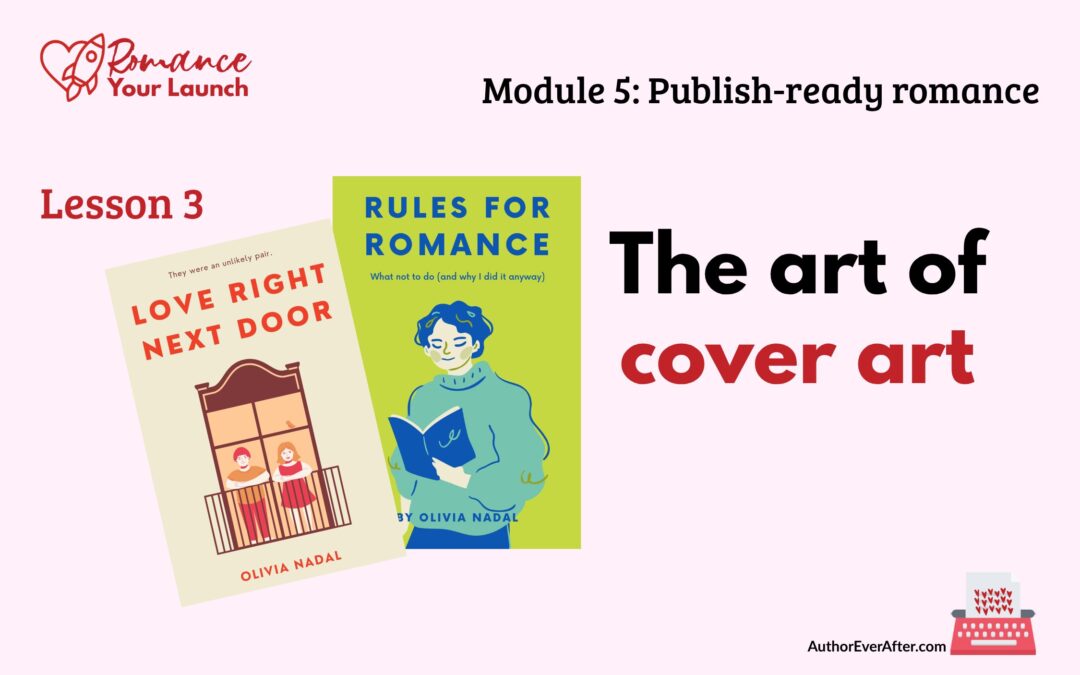
5.3 Romance book cover design guide for indie authors
Your feelings about what looks beautiful are almost beside the point. A romance cover is a signal, not self-expression. This romance book cover design guide shows you exactly what that signal needs to say and how to say it.

5.2 ISBNs for self-published authors: what you need to know
Before you upload your manuscript anywhere, you need to make one decision that affects every version of your book and every platform it lives on. Here’s what to know about ISBNs for self-published authors before you hit publish.

5.1 Romance novel metadata tips for self-published authors
Your book deserves to be found. But even a great romance novel stays invisible if your metadata isn’t doing its job. These romance novel metadata tips for self-published authors will help you get it right before you hit publish.

4.5 Line edit for a romance novel that feels polished
The line edit is where your romance stops feeling like a draft and starts feeling like a book. In this lesson, you’ll learn how to make your sentences clearer, sharper, and more intentional—without turning your voice into bland, beige prose.
4.4 Scene level edit for a romance novel that hits harder
Scene level edit for a romance novel that readers actually feel The structural edit asked whether your story works; the scene level edit for a romance novel asks whether your story feels. You've fixed the bones: the romance arc is present, the beats are in the right...

4.3 Structural edit for a romance novel that actually works
A structural edit is where you stop fussing over sentences and zoom all the way out to your romance as a whole. In this lesson, you’ll learn how to read your draft for structure, map the romance arc, and spot the big changes that will make everything you revise next actually worth the effort.

4.2 Beta readers for romance authors who want better books
Before you sink weeks into polishing sentences, you need to know if the story actually works for anyone who isn’t you. In this lesson, you’ll learn how to find and brief beta readers for romance authors so you get targeted, story-level feedback that makes revision easier instead of overwhelming.
4.1 Self-editing tips for romance authors who want readers
Self-editing is not a punishment for an imperfect draft; it’s how you give your romance a second life with a clearer head and a sharper eye. In this lesson, you’ll set yourself up with mindset, tools, and support so your edits actually help you reach more readers.
3.5 Social media strategy for romance authors
You do not need to be everywhere online to sell romance. In this lesson, you’ll choose one platform, decide what you actually want social media to do for your career, and build a sustainable posting rhythm that turns curiosity into clicks on your lead magnet.
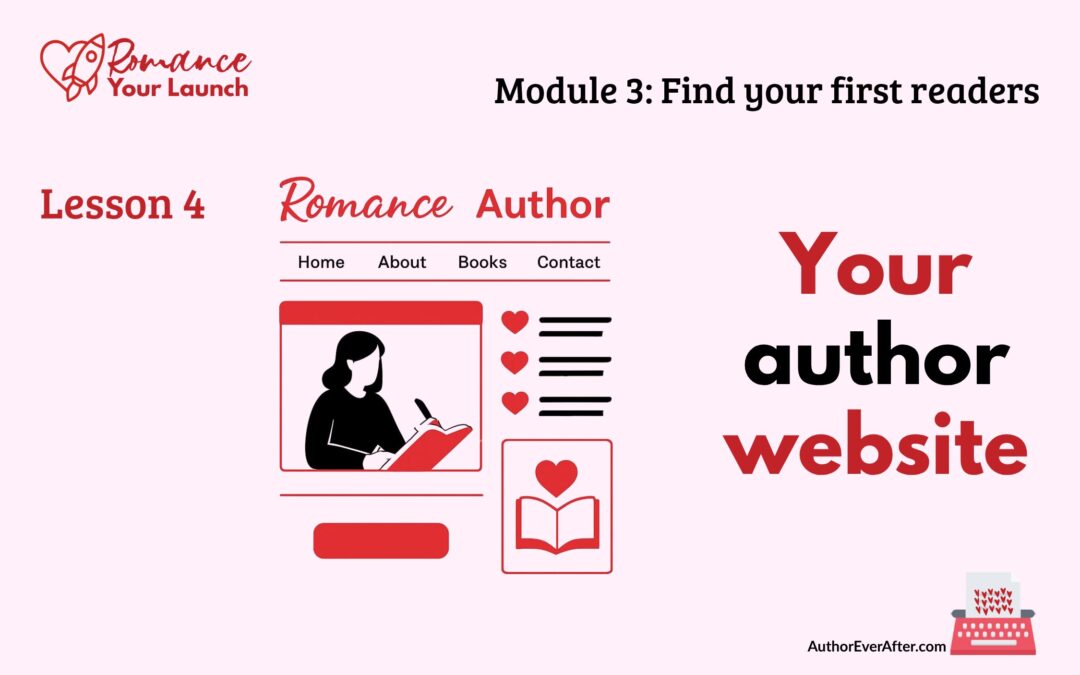
3.4 Simple romance author websites
Your author website doesn’t have to impress anyone. It has to exist and give readers one clear place to go. In this lesson, you’ll pick an easy platform, claim your URL, write your copy, and build a simple, on‑brand home that points straight to your books and your list.
3.3 Email list setup for romance authors
Followers belong to the platform. Your list belongs to you. In this lesson, you’ll connect your lead magnet to a clean email setup and draft a four‑email welcome sequence so every new romance reader is welcomed, warmed up, and ready when you launch your book.
3.2 Romance lead magnet ideas to grow your email list
Your lead magnet is not a throwaway freebie. It is often the first story a new reader ever sees from you. In this lesson, you’ll choose the right format, length, and emotional promise for your romance lead magnet so it attracts the readers who will go on to buy your books.
Need to go back to a previous lesson?
Return to Module 4: Revise & Shine to see all six lessons.
Or go back to the Romance Your Launch home page to see all the modules and links to their hub pages.
Want the next lesson in your inbox?
This post is part of the Romance Your Launch series—a lesson-by-lesson guide to self-publishing your romance novel, written for pre-published and early career romance authors.
.
—> Click this link, drop in your name and email address, and I’ll send you two to three lessons a week, starting with Lesson 1.
.
—> If you’d rather just pick up where the series is, join my regular email list from this link.