
All the bios fit to print: write romance author bios readers want to follow
Before we get into your romance author bio, I want to make a distinction that will save you a lot of confusion later: your bio and your About page are not the same thing, and they don’t do the same job.
Your About page versus your author bios
When someone visits your website and clicks through to your About page, they’ve already cleared a significant hurdle. They liked something they saw… your cover, your blurb, a post… enough to go looking for more. That’s a warm lead. Your About page has the space and the job to answer the question every potential reader is quietly asking before they open their wallet: what’s in it for me?
For a romance reader, what’s “in it” is an emotional experience. Specific tropes, a particular heat level, a guaranteed HEA, and a tone that matches what they’re in the mood for. Your About page (which we’ll cover in module 3) is where you get to make that case at length. It should be several hundred words, voice-forward, and specific enough about what you write that the right reader feels seen and the wrong reader self-selects out. That’s not a problem. That’s the system working.
Your social bios are a different animal entirely. Where your About page can breathe, your bios need to be sharp, fast, and precise. They’re not selling your book. They’re selling the follow. Their only job is to pique enough interest that a reader clicks through to find out more… or decides they want to stick around and see what you post next.
Why one bio doesn’t fit everywhere
Think of each platform as a different kind of party. You wouldn’t show up to a wedding in the same outfit you’d wear to a beach barbecue. You’d introduce yourself differently to your head office colleagues than you would to your cousin’s new partner at a family dinner. Same principle applies here.
There are two good reasons to write platform-specific romance author bios rather than copy-pasting one version everywhere.
First, each platform has a different audience with different expectations. On Goodreads, readers are interested in you as a reader… mentioning your favourite books and the authors who influence your writing lands differently there than anywhere else. On BookBub, where people are actively looking for deals, a bio that mentions your free reader magnet does real work. On TikTok, personality and specificity win. On LinkedIn, you probably just want people to know you exist without accidentally ending up in someone’s professional network newsletter.
Second, character limits shape how much you can say. As of early 2026:
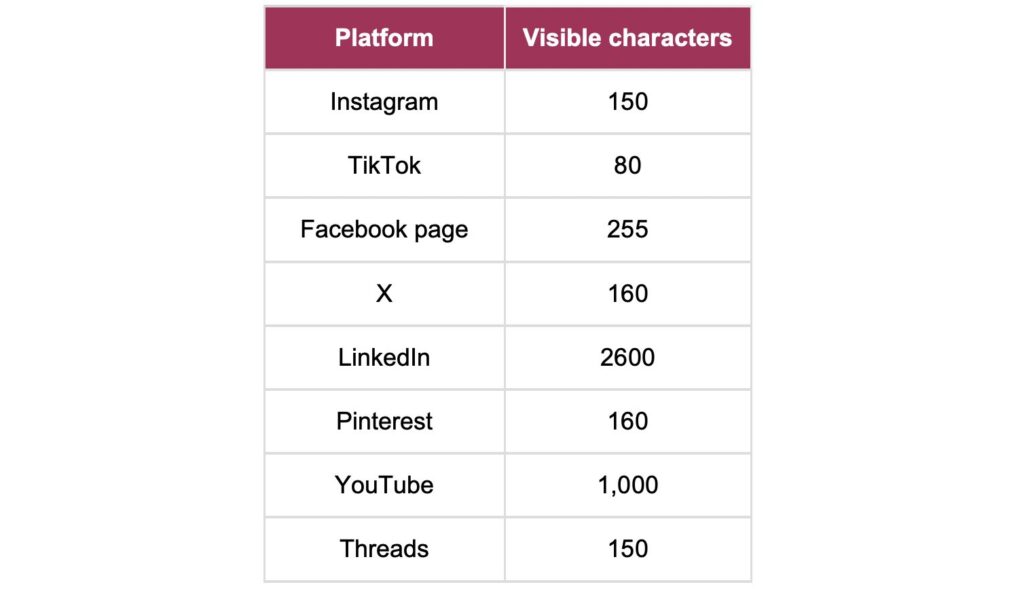
Your goal is either to keep your author bio within the visible character count, or to let it cut off on a deliberate mini-cliffhanger… something interesting enough that a reader taps see more. What you never want is a bio that trails off mid-sentence because you ran out of room without noticing.
One more thing worth saying: some of your most engaged readers will eventually find you on multiple platforms and notice that your bios are slightly different. For them, it becomes a bit of an easter egg. That’s a lovely bonus and a great reason not to copy-paste.
A five-step approach to writing your romance author bios
You can write a full set of platform bios in under an hour. I mean it. Give yourself a firm time limit, do a dirty draft, share it with the community for quick feedback, and call it good for now. The beauty of social media is how easy it is to update. Done and working is better than perfect and sitting in a draft folder.
Here’s the framework.
Step 1: Start with your name
Use the author name you chose in Lesson 1. That’s the easy part.
Step 2: State what you write
Be specific about your sub-genre and, where it makes sense for the platform, your heat level. Vague is the enemy of a good bio. “Danika Bloom, USA Today bestselling author of steamy romantic comedy” (as simple as that is) does more work than “author of romance novels.”
The level of specificity can flex by platform… “contemporary romance” on LinkedIn, “steamy small-town grumpy/sunshine romance” on Instagram… but your sub-genre should appear in every single bio you write, always.
Step 3: Brainstorm your weird and wonderful
Set a 10-minute timer and make a no-filter list of everything that makes you specifically and memorably you. Think:
- Quirks (afraid to fly, obsessed with spreadsheets, emotionally attached to houseplants)
- Identities (single mom, retired paramedic, librarian, teacher, recovering accountant)
- Delights (dark chocolate, K-dramas, gin, the Great Lakes, second-hand bookshops)
- Obsessions (men in kilts, fuzzy blankets, petting dog’s ears, purple ink pens)
This is not the place to be professional. This is the place to be specific and human. Readers don’t follow authors they admire from a distance. They follow authors they feel like they know.
Step 4: Connect your details to what you write
Scan your list and circle anything that deepens or echoes the emotional promise of your books. If you write humorous romance and you’re terrified of flying, that’s a perfect bio detail. If you write dark romance and eighty percent of your wardrobe is black readers who love dark romance will feel seen. The details that belong in your bios are the ones that say yes, this is the author who writes those books.
Step 5: Draft bios for at least three platforms
Using your name, your sub-genre, and your best two or three personal details, write:
- One short, punchy bio for a character-limited platform (Instagram, TikTok, or X)
- One medium-length bio for Facebook
- One complete bio for Amazon, Goodreads, BookBub, and your website
Even if you’re not active on every platform yet, claiming your name and posting a simple bio with a link to where you are active is an easy win you’ll thank yourself for later.
What good looks like: 2 real examples
You don’t have to invent this from scratch. Looking at how established authors handle their bios across platforms is clarifying in a way that no amount of general advice can match. (These are from 2024)
Melanie Harlow
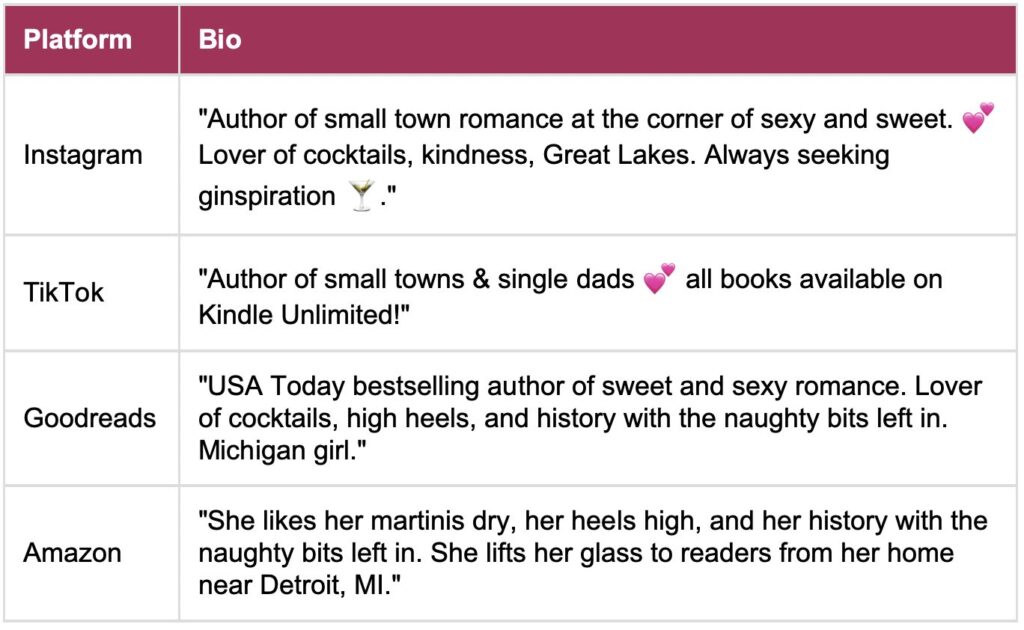
Notice: “sweet and sexy/sweet and spicy” appears everywhere—readers never have to guess. Her love of cocktails and “ginspiration” creates a cohesive, memorable persona across every platform without ever feeling copy-pasted.
LJ Shen
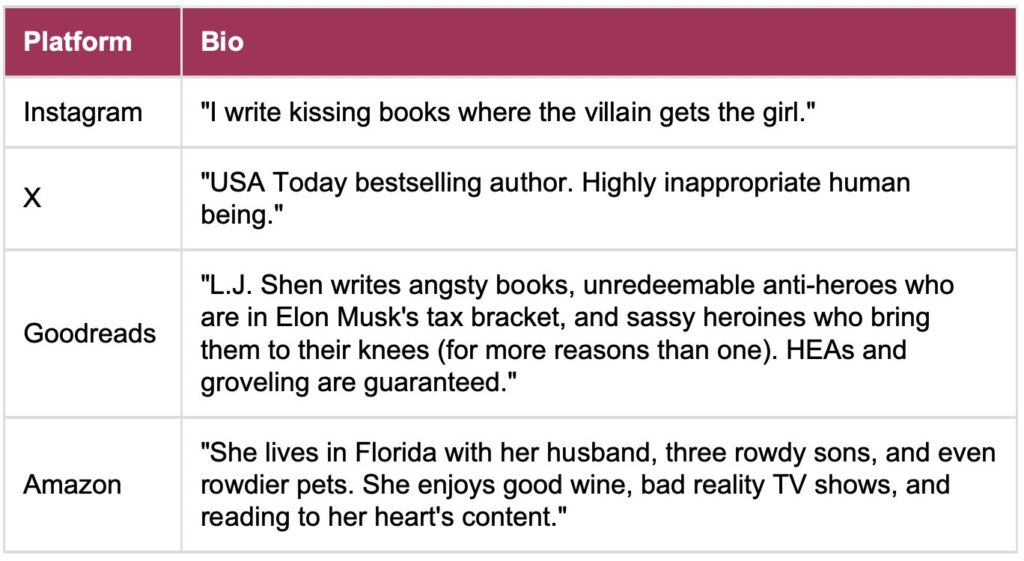
What both authors do well is commit. They’re not hedging or being vague in hopes of appealing to everyone. They know exactly who their reader is, and their bios speak directly to that person.
Key takeaway
A great author bio doesn’t try to impress everyone. It tries to delight the right reader and give everyone else a clear, kind exit. You’re not writing for maximum reach. You’re writing for the person who is already going to love your books, and making sure they recognize you when they find you.
Join Author Ever After
You’ll get immediate and full access to the Romance Your Launch program (all 11 modules), a worksheet for every lesson, plus three weekly, small group support meetings to answer all your questions, and a freaking amazing community of pre-published and early career romance authors who are building their indie publishing careers alongside you.
Get more details about the community here.
Or, go straight to the application form.
Get every lesson in the Romance Your Launch course
—> Click this link and I’ll send you two to three lessons a week, starting with Lesson 1.
—>Or, join my regular email list if you’d rather just pick up from the current lesson.
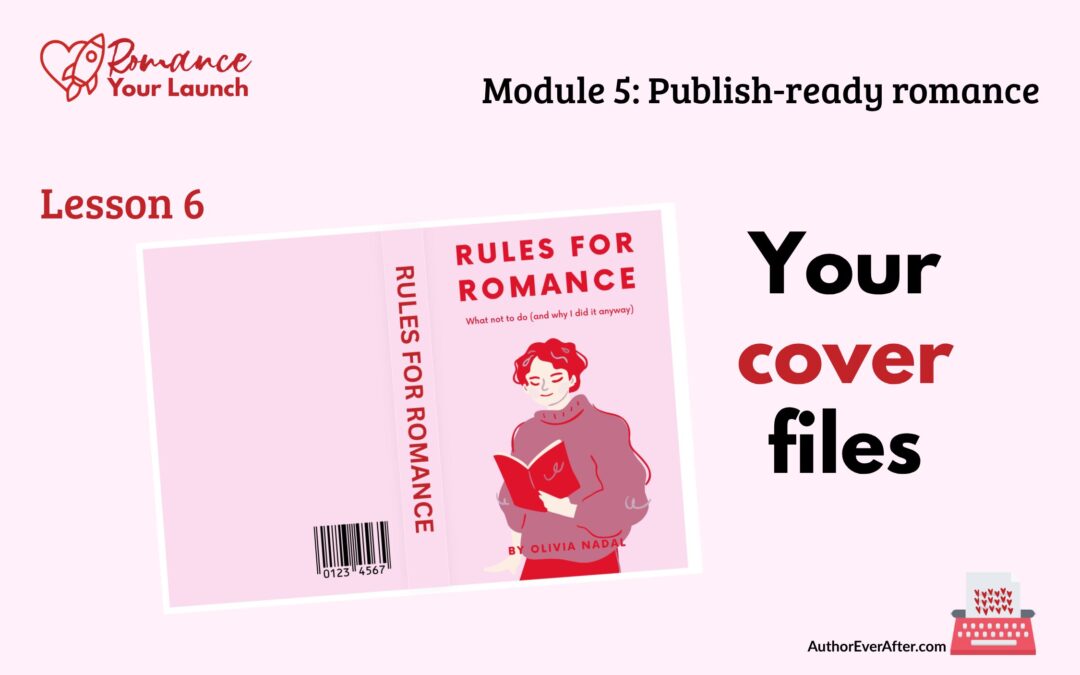
5.6 Book cover file specs for self-publishing authors
Book cover file specs for self-publishing authors Your cover designer has delivered your files. They're beautiful. You love them. You're ready to upload and get this book into the world. Understanding book cover file specs for self-publishing is the one thing standing...
5.5 Formatting check before you publish your romance novel
Your cover is beautiful. But a stunning cover file that fails a platform’s technical requirements can mean reprints, rejected uploads, or colours that shift dramatically between screen and print. Here’s how to get your book cover file specs right before anything goes live.
5.4 How to format a romance novel for self-publishing
Good formatting is invisible. Bad formatting costs you reviews you didn’t see coming. Here’s how to format a romance novel for self-publishing so your pages disappear and your readers stay in the story.
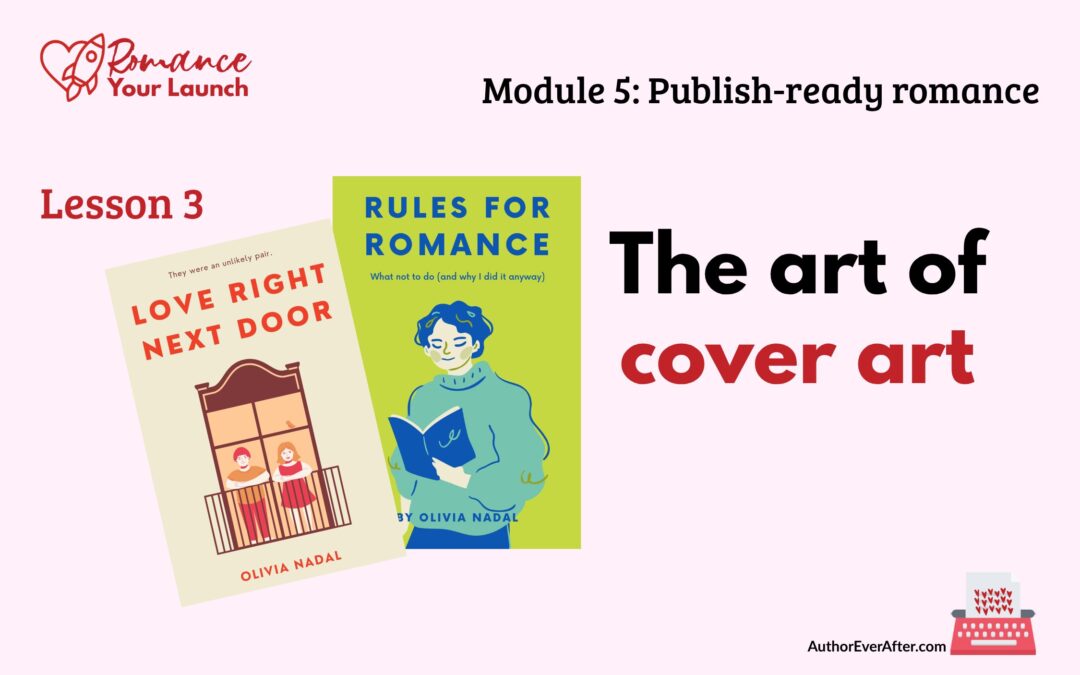
5.3 Romance book cover design guide for indie authors
Your feelings about what looks beautiful are almost beside the point. A romance cover is a signal, not self-expression. This romance book cover design guide shows you exactly what that signal needs to say and how to say it.

5.2 ISBNs for self-published authors: what you need to know
Before you upload your manuscript anywhere, you need to make one decision that affects every version of your book and every platform it lives on. Here’s what to know about ISBNs for self-published authors before you hit publish.

5.1 Romance novel metadata tips for self-published authors
Your book deserves to be found. But even a great romance novel stays invisible if your metadata isn’t doing its job. These romance novel metadata tips for self-published authors will help you get it right before you hit publish.
4.6 Final manuscript review before publishing your romance
“Almost there” is where a lot of authors stall out. In this lesson, you’ll walk through a final manuscript review before publishing so you can read like a reader, catch small issues that break immersion, and finally feel confident calling your romance done.

4.5 Line edit for a romance novel that feels polished
The line edit is where your romance stops feeling like a draft and starts feeling like a book. In this lesson, you’ll learn how to make your sentences clearer, sharper, and more intentional—without turning your voice into bland, beige prose.
Ready for the next module?
Go back to the Romance Your Launch home page to see all the modules and links to their hub pages.
Want the next lesson in your inbox?
This post is part of the Romance Your Launch series—a lesson-by-lesson guide to self-publishing your romance novel, written for pre-published and early career romance authors.
.
—> Click this link, drop in your name and email address, and I’ll send you two to three lessons a week, starting with Lesson 1.
.
—> If you’d rather just pick up where the series is, join my regular email list from this link.