
You—the brand: romance author branding from the inside out
Let me tell you about the most common branding mistake romance authors make. They open Canva, spend three hours choosing between shades of mauve and dusty rose, pick a font that feels vaguely romantic, slap their name on it, and declare themselves branded.
Six months later, nothing feels cohesive. The font doesn’t match the tone of their books. The colour palette looks exactly like forty other romance authors’ palettes. And they’re redesigning everything from scratch while wondering why their social media presence feels like a costume they’re wearing rather than a skin they’re living in.
The problem isn’t Canva. The problem is starting with the visuals before doing the inner work that makes those visuals actually mean something. That inner work is the heart of romance author branding—and that’s what this lesson is for.
What branding actually is (and what it definitely isn’t)
If you Google “author branding,” you will find approximately one thousand definitions, most of which are either so vague they’re useless or so corporate they belong in a quarterly earnings call rather than a conversation about romance novels.
So let’s clear the decks.
Branding is not:
- “I write smart and sexy romance” — as if that’s specific, and as if two thousand other romance authors didn’t just write the exact same thing on a Post-it note during a workshop
- A logo
- A colour palette
- A tagline you spent a week on and now feel vaguely trapped by
Branding is:
- Positioning your books so that the readers who will genuinely love what you write recognize themselves in what you offer
- The ongoing, evolving process of creating consistent perceptions about your books through your covers, emails, social media, and website
- A practice, not a destination. Something you build and refine over time, not something you finish
Here are the two definitions I come back to most often. S. Warren, author of The Bestselling Author Next Door, describes branding as
“positioning your book to reach readers. Your readers. New readers. Readers who are going to love your book.”
David Gaughran calls it
“the process of creating perceptions about our books through email, social media, and advertising.”
And he adds that it’s an ongoing process, not a fixed destination.
What I love about those two definitions together is that they place the reader at the centre. Your brand isn’t about you performing an identity. It’s about creating a consistent, recognizable signal so that the person who would love your books can find them… and trust them… before she’s read a single page.
When branding is working, you feel it as a reader
You’ve experienced good author branding from the other side. There are authors whose name on a cover tells you exactly what you’re in for. The heat level, the emotional tone, the approximate level of chaos or calm, the flavour of the humour. You don’t need to read the blurb.
- I’m a Talia Hibbert girl.
- I will one-click anything by Lucy Score.
- Give me all the Nalini Singh.
That’s branding working. Those authors have built such a consistent signal… through their covers, their blurbs, their social presence, their email voices, the feeling of their books… that readers have attached their reader identity to them. When a new title drops, existing readers pre-order without thinking. New readers discover them and immediately consume their backlist.
That’s what we’re building toward, deliberately, from the foundation up.
When your branding is working, it does five things that matter for your career. Your branding:
- helps you stand out in a romance market that is genuinely, legitimately crowded
- helps the right readers attach their reader identity to you and your books
- makes you look professional and trustworthy before someone opens the Look Inside
- builds the know, like, trust factor that turns browsers into buyers
- makes your content instantly recognizable… readers stop the scroll because they know it’s you
Why visual branding comes second
Here’s where the Canva-first approach goes wrong. Colours and fonts aren’t your brand. They’re the expression of your brand. And you can’t express something you haven’t yet identified.
Think about the authors whose visual identity feels completely right… where the colours, the fonts, the cover aesthetic, the Instagram grid all feel like the same person made them, and that person is clearly, specifically them. That coherence doesn’t come from picking pretty things. It comes from those visual choices being rooted in something true about who that author is and what her books feel like.
Melanie Harlow’s brand feels warm, witty, and a little bit chaotic in the most lovable way, because that’s what her books feel like. Talia Hibbert’s brand feels bold, intelligent, and radiantly herself, because that’s what her books feel like. The visual choices aren’t decorating a brand. They’re expressing one.
You can’t shortcut that sequence. Values and personality first. Visual identity second. Every time.
Your values are already in your books
This is the part most authors find surprising.
You don’t have to invent your brand values. They’re already there. In the tropes you’re drawn to. In the emotional beats you find most satisfying to write. In the conflicts your characters keep having… not because you planned it, but because you keep writing them. In the way your characters treat each other when things get hard. In what you make your heroines fight for. For instance:
- Second-chance romance authors often value forgiveness and the belief that people can grow.
- Found-family authors consistently value belonging and chosen connection over circumstance.
- Dark romance authors often value autonomy and the right to make choices others find incomprehensible… and the complexity of desire that doesn’t fit neatly into what we’re supposed to want.
You’ve probably been writing your values into your books this whole time without naming them. This lesson is about naming them. Because once you have words for what your books stand for, everything else gets easier. You know what to post about. You know what your newsletter should feel like. You know whether a cover direction is right for your brand or just pretty. You know what to say when someone asks what your books are about and you want to say something better than “it’s a romance novel.”
The values-to-visual pipeline
Here’s a concrete example of how this works in practice.
Let’s say an author works through her values and lands on:
- joy
- resilience
- chosen family, and
- liberation.
Immediately, that tells us something. Her books probably end with characters who have genuinely changed… not just found love, but found something in themselves. Her humour is probably warm rather than snarky. Her conflicts probably have emotional weight beneath the surface tension. Her reader probably wants to feel uplifted, not just entertained.
Now translate that into visual language. Joy and liberation read as colour… warm, saturated, alive. Resilience and chosen family read as warmth, images of connection, touch, togetherness. Not cold minimalism. Not dark and brooding. Those visual instincts come from the values, which means when she builds her Canva templates and briefs her cover designer and chooses her Instagram aesthetic, everything is pointing in the same direction.
Compare that to an author who lands on:
- tension
- moral complexity
- emotional intensity, and
- the right to want what you want.
Different values. Completely different visual language. Darker palette, more negative space, a different kind of cover. A newsletter that sounds nothing like the first author’s newsletter. Both are legitimate. Both are specific. Neither is “smart and sexy romance.”
Values are the what. Personality traits are the how
Two authors can share the same values… love, loyalty, found family, second chances… and produce completely different books. One writes snarky, banter-heavy, high-heat romcoms with chaotic heroines. The other writes slow-burn, introspective, emotionally devastating stories with measured, quiet tension. The values overlap. The personality is where they diverge.
Your personality traits are the flavour of your brand. They show up in how your characters talk to each other, in the rhythm of your prose, in your newsletter voice, in your social captions. Your tolerance for angst. Your appetite for humour. How dark you’re willing to go. The specific texture of the emotional experience you create for readers.
This is also where the gap between who you are and who you want to be known as can be revealing. If the traits you’d love readers to use to describe you-the-author look nothing like the traits that actually describe you as a person, that’s worth noticing. It might mean you’re chasing someone else’s brand instead of uncovering your own. It might mean your writing isn’t yet reflecting your aspirations. Either way, the gap is information.
The sweet spot is the overlap between the traits that are genuinely, authentically you and the traits you want readers to recognize in your books. That’s not something you manufacture. It’s something you find.
The brand that sounds like you
One thing I want to make clear before we get into the work: your brand is not a performance.
The authors who build the most loyal readerships aren’t the ones with the cleverest taglines or the most aesthetically consistent Instagram grids. They’re the ones who show up consistently as themselves… with the values that actually matter to them, in the voice that’s actually theirs, writing the stories that genuinely excite them. Readers are excellent at detecting inauthenticity. They’re even better at recognizing something real.
Your brand is not a persona you put on when you open the author laptop. It’s the true, specific, particular version of you that shows up in your books. Named, sharpened, and made consistent enough that readers can recognize it before they’ve even met you.
The work of this lesson is the work of uncovering that. Not inventing it. Uncovering it.
Before you move on
Before you open the worksheet for this lesson, sit with one question:
When a reader finishes one of my books and goes to tell a friend about it… not just the plot, but the feeling of it… what do I want her to say?
Not the marketing copy answer. The real one. The answer that would make you feel like you’d actually done what you set out to do.
Write it down somewhere. It doesn’t have to be polished. It just has to be honest. That answer is the seed of everything you’re about to build.
The Lesson 3 worksheet is where you do the actual excavation… working through your values, your traits, and pulling it all together into the brand foundation that Lesson 4’s visual work will build on. It’s inside Author Ever After, along with the support calls and community feedback that will make your answers sharper and more useful than anything you’d arrive at alone.
Because here’s the thing about brand work: a brand that only makes sense in your own head isn’t doing its job. It needs to land with other humans. And the best place to test it, refine it, and hear what it actually communicates to real readers?
That’s what the community is for.
Key takeaway
Your author brand is not something you invent from scratch. It is something you uncover by naming the values you already care about, the traits that already show up in your work, and the emotional experience you are already trying to create for readers. You do not need to be profound. You do not need to be unique in every possible way. You just need to be specific, honest, and recognizably you.
Join Author Ever After
You’ll get immediate and full access to the Romance Your Launch program (all 11 modules), a worksheet for every lesson, plus three weekly, small group support meetings to answer all your questions, and a freaking amazing community of pre-published and early career romance authors who are building their indie publishing careers alongside you.
Get more details about the community here.
Or, go straight to the application form.
Get every lesson in the Romance Your Launch course
—> Click this link and I’ll send you two to three lessons a week, starting with Lesson 1.
—>Or, join my regular email list if you’d rather just pick up from the current lesson.
This lesson is part of Module 2: Your romance author identity in the Romance Your Launch program.
5.6 Book cover file specs for self-publishing authors
Book cover file specs for self-publishing authors Your cover designer has delivered your files. They're beautiful. You love them. You're ready to upload and get this book into the world. Understanding book cover file specs for self-publishing is the one thing standing...
5.5 Formatting check before you publish your romance novel
Your cover is beautiful. But a stunning cover file that fails a platform’s technical requirements can mean reprints, rejected uploads, or colours that shift dramatically between screen and print. Here’s how to get your book cover file specs right before anything goes live.
5.4 How to format a romance novel for self-publishing
Good formatting is invisible. Bad formatting costs you reviews you didn’t see coming. Here’s how to format a romance novel for self-publishing so your pages disappear and your readers stay in the story.
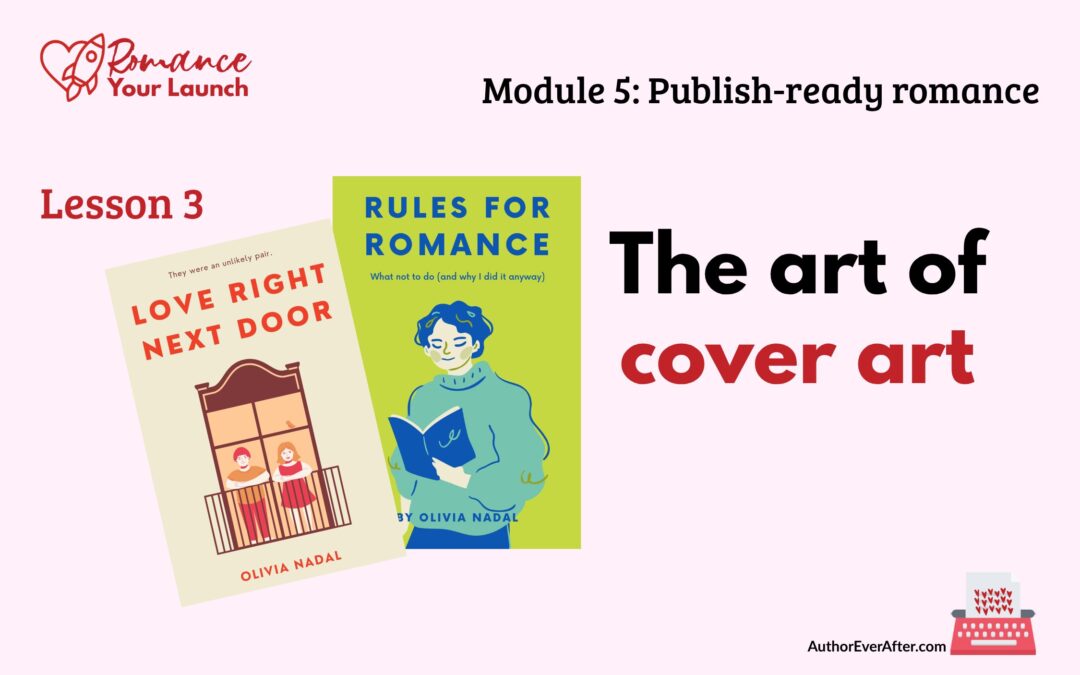
5.3 Romance book cover design guide for indie authors
Your feelings about what looks beautiful are almost beside the point. A romance cover is a signal, not self-expression. This romance book cover design guide shows you exactly what that signal needs to say and how to say it.

5.2 ISBNs for self-published authors: what you need to know
Before you upload your manuscript anywhere, you need to make one decision that affects every version of your book and every platform it lives on. Here’s what to know about ISBNs for self-published authors before you hit publish.

5.1 Romance novel metadata tips for self-published authors
Your book deserves to be found. But even a great romance novel stays invisible if your metadata isn’t doing its job. These romance novel metadata tips for self-published authors will help you get it right before you hit publish.
Ready for the next module?
Go back to the Romance Your Launch home page to see all the modules and links to their hub pages.
Want the next lesson in your inbox?
This post is part of the Romance Your Launch series—a lesson-by-lesson guide to self-publishing your romance novel, written for pre-published and early career romance authors.
.
—> Click this link, drop in your name and email address, and I’ll send you two to three lessons a week, starting with Lesson 1.
.
—> If you’d rather just pick up where the series is, join my regular email list from this link.