
Beta readers for romance authors who want real story feedback
Here’s what happens to a lot of romance authors at the end of a first draft. You’ve written the whole thing, the characters are real to you, the emotional arc makes complete sense in your head, and you know exactly why the hero acts the way he does in that one messy chapter. Somewhere in your self-editing, a creeping doubt arrives: does this actually work for a reader who isn’t me.
That question is worth answering before you spend weeks polishing sentences in scenes that might need to be cut, or sharpening dialogue in a chapter a reader would skim. Beta readers for romance authors at this stage aren’t line editors; they’re test readers who show you whether the story experience you intended is the one they’re actually having.
How this beta round is different
Most authors think of beta readers as a final step, something you do when the book is almost done as a last check before proofreading. That’s a valid use, and you’ll come back to a later-stage beta in the publishing pipeline. This round is different. You’re bringing in readers when you have a complete but rough draft specifically to test the story experience.
You’re not asking for grammar notes, chapter‑break opinions, or whether they like your commas. You’re asking something much more basic: for a reader who picked up this book wanting this sub‑genre and these tropes, does the story feel like it delivers on that promise. Beta readers at this stage are the bridge between “I finished a draft” and “I know what to fix and why.”
Who actually belongs in this role
Not all opinions are equally useful here, and the most common beta‑reader mistake is asking the wrong people. The person you want for this round is a reader who enjoys your specific sub‑genre and actively likes the tropes you’re using; if someone has complicated feelings about dark romance, she’s not the right beta for your dark romance, because her discomfort with the genre will show up as fake “craft” problems.
If a reader only reaches for sweet small‑town, her reaction to your steamy mafia romance will be shaped by expectations that have nothing to do with your actual audience. And the friend who can only say “I loved it” is lovely, genuinely, and also useless as a story‑level beta reader. You’re looking for people whose natural reading taste already matches the kind of romance you’re writing so their reactions map closely to the readers you want to reach. Fellow romance readers and writers in your sub-genre are often your best bet, including the folks who hang out with you in places like Author Ever After.
For this pass, two to four beta readers is plenty. Any fewer and you can’t spot patterns. Any more and you’ll drown in conflicting opinions before you’ve built the editorial stamina to sort through them. Your beta reader team should feel like a small, intentional panel at this stage, not a crowd.
What to send and how to frame it
You’re not sending a polished manuscript and pretending it’s almost done. You’re sending a complete story draft that you already know needs more work. Your job is to frame that clearly so your beta readers don’t pour their energy into typos when you need them tracking their emotional experience.
Start with a short context paragraph: three to five sentences that tell your beta what kind of romance this is—sub-genre, heat level, primary tropes. Think of it as the promise you’re making: this is the kind of romance this book wants to be. They need to read it against that promise, not against their own random assumptions.
Follow with a stage disclaimer, something along the lines of: “This is a complete draft that hasn’t been fully edited yet. I’m looking for your reactions to the story, characters, tropes, and pacing, not line edits or grammar fixes.” Without that, many well-meaning readers will spend the whole read hunting commas instead of noticing when the middle drags or the black moment doesn’t land.
Then give them specific questions. “What did you think” is vague and invites politeness. Try questions like:
- where did you lose interest or feel tempted to skim;
- did this feel like the kind of book you expect from this sub-genre and these tropes;
- did the central romance feel emotionally satisfying by the end;
- did any character choices feel confusing or out of character; and
- were there any promised tropes that felt underused or that quietly disappeared.
Beta readers give you sharper feedback on your romance when your questions focus them on what it felt like to read the story, not on how they’d rewrite it themselves.
In other words, ask them questions that ask them to share their experience and not questions that lead them to offer their fixes.
What to do when feedback comes in
The hardest part of beta feedback isn’t the criticism, it’s the noise: contradictions, taste dressed up as craft, intensely specific “fixes” that don’t match the book you’re trying to write. Learning to sort signal from noise is a core professional skill. Start by looking for patterns. If one beta isn’t into your grumpy hero and two others adore him, that’s taste; note it and move on.
If several readers independently mention that the middle sags, a subplot vanishes, or the emotional climax comes out of nowhere, that’s a revision target whether or not they describe it in the same words.
Patterns don’t lie.
Then check each note against the promise you made in your context paragraph. If you pitched this as a low-angst cozy and multiple readers tell you it got darker than they expected, that’s useful data. You can choose to adjust the story to match the promise, or adjust the eventual marketing copy to attract readers who want what the book actually is. Both are valid.
You get to decide which serves your career.
Finally, sort each piece of feedback into the revision stage where it belongs.
Structural issues—missing beats, muddled motivations, rushed endings, sagging middles—belong in Stage 1.
Scene-level issues—weak trope moments, flat emotional beats, a romance arc that doesn’t earn its resolution—belong in Stage 2.
Line-level issues wait for Stage 3. There’s no point polishing a scene you eventually may cut.
Beta readers are most powerful when their notes help you decide which pass each problem belongs in.
How this beta round supports what comes next
This round of beta reading is deliberately scoped around one big question: does this story deliver on its promise to the reader. You’re catching foundational problems now, when they’re still relatively easy to fix, so your structural, scene-level, and line edits are sharper and more targeted. Instead of wondering “what do I need to fix?” When you send your manuscript yo an editor, you’ll be asking “how do I fix these specific things that keep showing up in my manuscript?”
Later, near publication, you’ll bring in a different kind of beta reader: people looking for continuity errors, proofing misses, and formatting glitches. That final read is about polish. This one is about foundation. Getting the foundation right first is what keeps your future reviews from saying, “I wanted to love this, but something about the story just didn’t land.”
Key takeaway
Beta readers at this stage aren’t here to validate your romance draft; they’re here to show you where the reading experience they had didn’t match the promise you made. Two to four aligned readers, briefed clearly and asked specific, story-focused questions, will give you more useful revision direction than endless self-editing in isolation—because they see what you’re too close to notice.
Join Author Ever After
You’ll get immediate and full access to the Romance Your Launch program (all 11 modules), a worksheet for every lesson, plus three weekly, small group support meetings to answer all your questions, and a freaking amazing community of pre-published and early career romance authors who are building their indie publishing careers alongside you.
Get more details about the community here.
Or, go straight to the application form.
Get every lesson in the Romance Your Launch course
—> Click this link and I’ll send you two to three lessons a week, starting with Lesson 1.
—>Or, join my regular email list if you’d rather just pick up from the current lesson.
This lesson is part of Module 4: Revise & shine in the Romance Your Launch program.
5.6 Book cover file specs for self-publishing authors
Book cover file specs for self-publishing authors Your cover designer has delivered your files. They're beautiful. You love them. You're ready to upload and get this book into the world. Understanding book cover file specs for self-publishing is the one thing standing...
5.5 Formatting check before you publish your romance novel
Your cover is beautiful. But a stunning cover file that fails a platform’s technical requirements can mean reprints, rejected uploads, or colours that shift dramatically between screen and print. Here’s how to get your book cover file specs right before anything goes live.
5.4 How to format a romance novel for self-publishing
Good formatting is invisible. Bad formatting costs you reviews you didn’t see coming. Here’s how to format a romance novel for self-publishing so your pages disappear and your readers stay in the story.
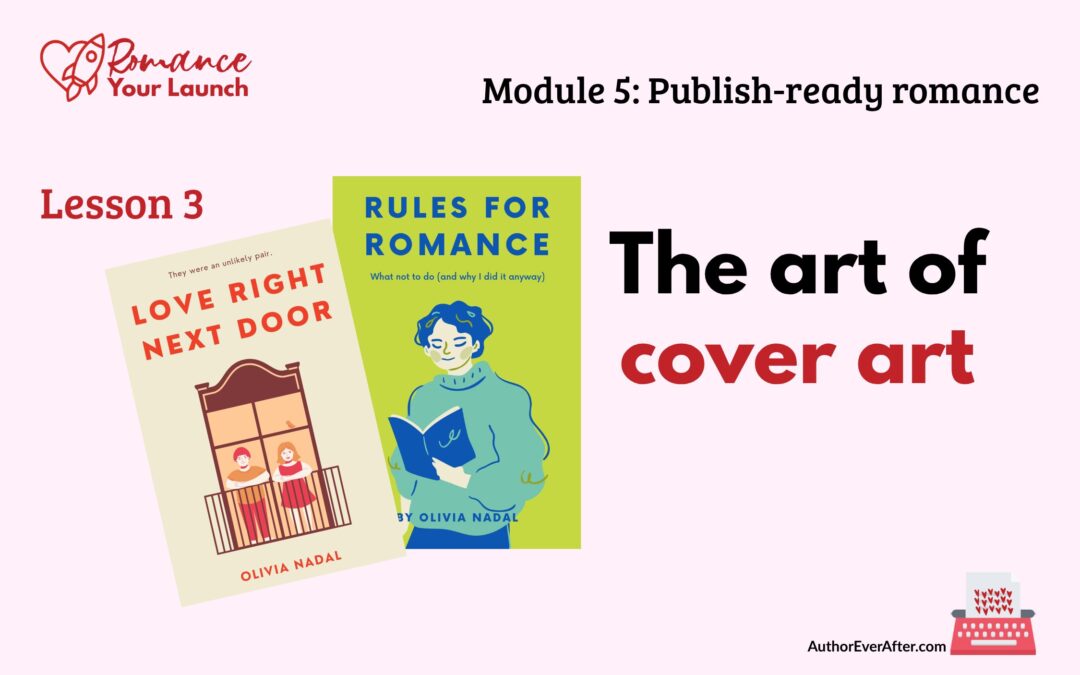
5.3 Romance book cover design guide for indie authors
Your feelings about what looks beautiful are almost beside the point. A romance cover is a signal, not self-expression. This romance book cover design guide shows you exactly what that signal needs to say and how to say it.

5.2 ISBNs for self-published authors: what you need to know
Before you upload your manuscript anywhere, you need to make one decision that affects every version of your book and every platform it lives on. Here’s what to know about ISBNs for self-published authors before you hit publish.

5.1 Romance novel metadata tips for self-published authors
Your book deserves to be found. But even a great romance novel stays invisible if your metadata isn’t doing its job. These romance novel metadata tips for self-published authors will help you get it right before you hit publish.
4.6 Final manuscript review before publishing your romance
“Almost there” is where a lot of authors stall out. In this lesson, you’ll walk through a final manuscript review before publishing so you can read like a reader, catch small issues that break immersion, and finally feel confident calling your romance done.

4.5 Line edit for a romance novel that feels polished
The line edit is where your romance stops feeling like a draft and starts feeling like a book. In this lesson, you’ll learn how to make your sentences clearer, sharper, and more intentional—without turning your voice into bland, beige prose.
4.4 Scene level edit for a romance novel that hits harder
Scene level edit for a romance novel that readers actually feel The structural edit asked whether your story works; the scene level edit for a romance novel asks whether your story feels. You've fixed the bones: the romance arc is present, the beats are in the right...

4.3 Structural edit for a romance novel that actually works
A structural edit is where you stop fussing over sentences and zoom all the way out to your romance as a whole. In this lesson, you’ll learn how to read your draft for structure, map the romance arc, and spot the big changes that will make everything you revise next actually worth the effort.
4.1 Self-editing tips for romance authors who want readers
Self-editing is not a punishment for an imperfect draft; it’s how you give your romance a second life with a clearer head and a sharper eye. In this lesson, you’ll set yourself up with mindset, tools, and support so your edits actually help you reach more readers.
3.5 Social media strategy for romance authors
You do not need to be everywhere online to sell romance. In this lesson, you’ll choose one platform, decide what you actually want social media to do for your career, and build a sustainable posting rhythm that turns curiosity into clicks on your lead magnet.
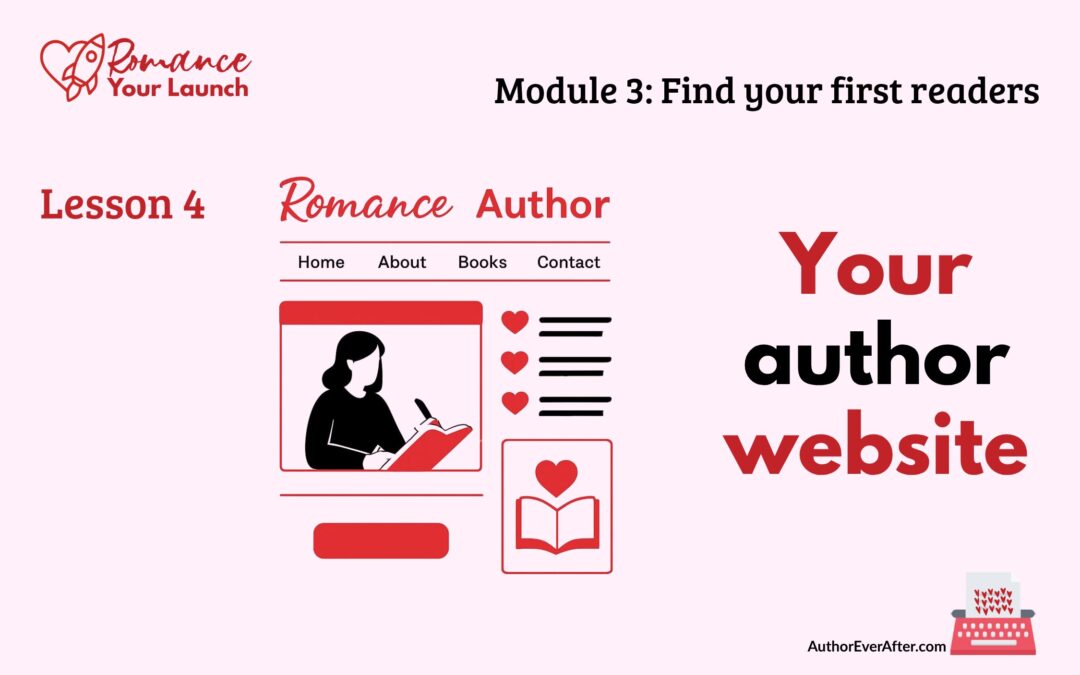
3.4 Simple romance author websites
Your author website doesn’t have to impress anyone. It has to exist and give readers one clear place to go. In this lesson, you’ll pick an easy platform, claim your URL, write your copy, and build a simple, on‑brand home that points straight to your books and your list.
3.3 Email list setup for romance authors
Followers belong to the platform. Your list belongs to you. In this lesson, you’ll connect your lead magnet to a clean email setup and draft a four‑email welcome sequence so every new romance reader is welcomed, warmed up, and ready when you launch your book.
3.2 Romance lead magnet ideas to grow your email list
Your lead magnet is not a throwaway freebie. It is often the first story a new reader ever sees from you. In this lesson, you’ll choose the right format, length, and emotional promise for your romance lead magnet so it attracts the readers who will go on to buy your books.
Need to go back to a previous lesson?
Return to Module 4: Revise & Shine to see all six lessons.
Or go back to the Romance Your Launch home page to see all the modules and links to their hub pages.
Want the next lesson in your inbox?
This post is part of the Romance Your Launch series—a lesson-by-lesson guide to self-publishing your romance novel, written for pre-published and early career romance authors.
.
—> Click this link, drop in your name and email address, and I’ll send you two to three lessons a week, starting with Lesson 1.
.
—> If you’d rather just pick up where the series is, join my regular email list from this link.