
Romance lead magnet ideas to grow your email list
Your email list needs more than a half‑hearted sample to grow. This lesson walks you through proven romance lead magnet ideas so you can choose a short story, prequel, side‑character bonus, or strong sample that delivers your signature emotional hit and makes new readers eager to join your email list.
Give them a reason to say yes
When I published my first romance novel, nobody told me I should be building an email list before my book was live. Nobody told me a lot of things, which is part of why this course exists. So when I finally decided I wanted a list, I used the first three chapters of the novel I’d just published as my sign-up incentive.
It worked well enough. A few hundred people signed up. Some of them probably bought the book.
But here’s the problem: those three chapters weren’t designed to do the job a lead magnet needs to do. They didn’t introduce a cold reader to my world on her terms. They dropped her into a story without a satisfying payoff, because the payoff was in the book she hadn’t bought yet. It wasn’t a gift. It was a sample. Lots of romance readers will react badly to this “bait and switch” when they expect an HEA and are left being asked to pay to see it. That’s a terrible first impression for readers.
I’ve learned a lot about lead magnets since then. This lesson is what I wish someone had handed me before I hit publish.
Why your email list matters most
Before we get into the what and how of lead magnets, let’s get clear on why this matters. “Build an email list” is advice that gets thrown around constantly in indie publishing circles, often without much explanation of why it’s worth your time.
Here it is: your email list is the only reader relationship you actually own.
Your TikTok following? The platform owns it. One algorithm change, one account suspension, one company acquisition, and you could wake up tomorrow with no reliable way to reach the readers you spent two years gathering. The same is true for Instagram, Facebook, Substack, any of it. You’re renting attention on someone else’s platform, and the terms can change at any time.
Your email list is different. Those readers gave you their address directly. The relationship lives in your account, not on a platform. When you have a new book live, a cover reveal to share, a sale running, or just a story you want to tell your readers, you can reach them directly. No algorithm decides whether your content gets seen. No ad spend is required. No hoping they happen to scroll past at the right moment.
Romance readers are also genuinely enthusiastic email subscribers. They follow their favourite authors. They want to know when the next book is coming. They pre-order. They leave reviews. They tell their reader friends. The readers on your list aren’t passive. They’re the most engaged and the most likely to buy. The relationship you build with them through consistent, honest, enjoyable emails is what turns a one-time reader into someone who pre-orders every book you write without needing to be convinced.
That’s why we’re talking about this in Module 5, before your book is live. The authors who launch to crickets are usually the ones who started building their list after publication. The authors who launch to real, warm readers started earlier and used a lead magnet to do it.
So what is a lead magnet?
A lead magnet is something valuable you offer for free in exchange for a reader’s email address. It’s the answer to the question every cold reader is quietly asking before she subscribes: what do I get out of this?
For romance authors, the most effective answer is almost always the same: a story.
Not a PDF of tips. Not a checklist. Not a quiz. A story. A short, complete piece of fiction that delivers the same emotional experience your full-length books deliver, in miniature. Something a reader can start and finish in one sitting and put down thinking, I want more of this.
Here’s the distinction to keep in mind as we go through this lesson.
A lead magnet is content for a cold audience: readers who haven’t read your books yet and found you through social media, a blog post, a newsletter swap, or a recommendation. They don’t know you. They’re curious about you. Your lead magnet is your first real introduction to those readers, and its job is to give them enough of your world, your voice, your heat level, and your emotional tone that they decide they want to stay in it.
A reader cookie is content for readers who have just finished one of your books. These are warm readers who already love you and want more of the specific couple they just met. A reader cookie, typically a bonus epilogue, invites those readers onto your list from the back matter of your book. Same list-building goal. Completely different audience. Completely different content. We’ll cover strategies for reader cookies in a later module.
This lesson is about lead magnets, which means we’re designing for the stranger. The woman who found your Instagram last week, thought your vibe looked interesting, and clicked the link in your bio. She’s on the fence. She’s not handing over her email address for nothing. What are you going to give her?
What makes a romance lead magnet work
The lead magnets that convert, meaning readers actually sign up, actually download, actually read, and actually feel something, have three things in common.
They deliver your emotional promise.
Your lead magnet isn’t just content. It’s a sample of the experience readers can expect from your full-length books. If you write slow-burn with aching tension and a guaranteed emotional payoff, your lead magnet should feel like that. If you write chaotic, bantery romantic comedy with chemistry that crackles off the page, your lead magnet should feel like that. A reader who signs up, reads your free story, and thinks this is exactly my kind of book is a reader who will one-click your debut the moment it’s live.
They’re complete.
A lead magnet that ends on a cliffhanger or cuts off mid-arc and effectively demands the reader buy your book to get resolution feels like a bait and switch. Readers notice. They feel manipulated, even if they can’t quite name why. Your lead magnet should tell a complete story. Small, contained, satisfying. The reader closes it and thinks, I want more of this, not, I can’t believe that just ended.
They’re the right length for the job.
This is not the place to prove how much you can write. A cold reader who picked up your lead magnet on a whim is not committing to a novel. She’s sampling. Keep it lean. Between 3,000 and 10,000 words is the sweet spot for most romance lead magnets: long enough to deliver a real emotional experience, short enough that she actually reads it before she forgets why she signed up.
Four lead magnet types that work
There’s no single right answer here, but there are a handful of formats that consistently work well. Pick the one that fits your book and your bandwidth.
The prequel short story.
A short complete story set before your main book begins, featuring your main couple or a key secondary character. This works beautifully when there’s meaningful backstory that didn’t make it into the book: the moment before the meet-cute, the first encounter years earlier, the event that set everything in motion. Readers get context that deepens their experience of the full-length book, and they get it in a satisfying complete story. Aim for 4,000 to 8,000 words.
The side-character story.
A short complete story centred on a secondary character from your main book or your series who gets their own arc and HEA. This is especially effective if you’re writing a series. It gives readers a taste of your world and plants the seed of a character they’ll root for in a future book (preferably the next book), strong on emotional payoff, and it tends to convert well because it functions as a standalone while also deepening the world readers are about to enter. Aim for 7,500 to 10,000 words.
The tropey one-shot.
A short self-contained story, not directly connected to your main book, that delivers the core trope or emotional experience your books are (or will be) known for. Forced proximity. A grumpy-sunshine pairing. Fake relationship. A second-chance reunion. This option works well if you don’t have secondary characters to draw from, or if your main book’s world is complex enough that a prequel requires too much setup. Aim for 3,000 to 6,000 words.
The generous sample.
The first chapter or two of your actual book, packaged and delivered as a standalone reading experience, not just a “look inside,” but something that stands on its own as an introduction. This works best when your opening chapters are genuinely strong and leave readers wanting more in a way that feels exciting rather than frustrating. It’s also the lowest-writing-time option, which matters if you’re already deep in revisions. Honest caveat: a complete original story will usually outperform a sample. But a strong sample beats nothing, and it beats a weak original story too. Just make 100% sure the page that the reader uses to download the sample makes it extremely clear that the sample does not end in an HEA and that the full story will need to be purchased.
Understand the job your lead magnet is doing
Your reader snapshot from Lesson 1 is your compass here. Pull it out.
The lead magnet that works for a reader who’s hiring your books for comfort and cozy familiarity is not the same lead magnet that works for a reader hiring them for catharsis and emotional wreckage. One wants warmth and a soft landing. The other wants to feel something big.
Think the difference between a light Jennifer Crusie rom-com and a gutting Colleen Hoover story.
Ask yourself: what is my reader hoping to feel when she picks up a free story from an author she’s considering? Then make sure your lead magnet delivers exactly that, completely and in miniature.
A few examples to get your brain storming:
If you write small-town contemporary with grumpy-sunshine energy and medium heat, a prequel short story featuring your main couple’s first awkward encounter several years earlier, complete with banter, tension, and a moment that hints at something bigger, is doing exactly the right job. It’s warm, it shows your tone and heat level without overselling, and it ends with the reader smiling and wanting more.
If you write dark romance with morally grey heroes and high heat, a tropey one-shot that goes somewhere intense and delivers a complicated emotional payoff does the job. It signals clearly: this is what you’re getting from me. It self-selects for the reader who wants exactly that and filters out the reader who would leave you a one-star review for content she wasn’t prepared for.
If you write sapphic historical romance with slow burn and lush prose, a side-character story set in your world, with the same period detail and a complete arc for a character your reader will meet in the main book, tells your ideal reader you can hold a world together and make her feel things before she’s committed to the full novel.
Scope it so it doesn’t eat your writing life
Your lead magnet should not take three months to write.
You’re a pre-published author with a manuscript to finish, revise, and publish. Your lead magnet matters. It also matters less than your book. If the lead magnet you’ve chosen leads you to spend six weeks writing an 25,000-word prequel novella while your debut novel is still waiting for your line edit, you’ve made the wrong call.
The right lead magnet is the one you can complete in a few focused writing sessions, a week or two at most, without derailing the work that’s actually getting you to publication. That usually means shorter is better, the format should be one you’re comfortable in, and the story shouldn’t require you to invent entirely new characters, worldbuilding, or backstory from scratch.
If your tropey one-shot idea keeps expanding, scope it back down. If your prequel short story refuses to resolve in under 10,000 words, something in the concept is too big for the format. A tight, satisfying 5,000-word story that readers actually finish is worth far more than a sprawling 25,000-word novella that half your subscribers abandon before the end.
You want that reader to get the emotional pay-off of reading to the end.
Key takeaway
Your lead magnet is not a marketing asset. It’s a story, the first one many of your readers will ever read from you. Its job is to deliver your emotional promise in miniature to someone who doesn’t know you yet and is deciding whether she wants to stay.
Your email list is where those readers live once they sign up. It’s the asset that will support every book launch you ever do, and keeps your backlist alive between launches. Building it before your book is live, with a lead magnet designed for the right reader, is one of the most valuable things you can do right now.
Choose a format that fits your book and your bandwidth. Scope it so it supports your writing life rather than competing with it. And when you sit down to write it, write it the same way you’d write any story: for a reader who deserves something real.
The one-sentence concept you’re building toward:
My lead magnet is a [format], featuring [who it’s about], that delivers [trope or emotional experience], and is approximately [word count] words long.
That sentence is your brief. The worksheet takes you through everything you need to get there.
Join Author Ever After
You’ll get immediate and full access to the Romance Your Launch program (all 11 modules), a worksheet for every lesson, plus three weekly, small group support meetings to answer all your questions, and a freaking amazing community of pre-published and early career romance authors who are building their indie publishing careers alongside you.
Get more details about the community here.
Or, go straight to the application form.
Get every lesson in the Romance Your Launch course
—> Click this link and I’ll send you two to three lessons a week, starting with Lesson 1.
—>Or, join my regular email list if you’d rather just pick up from the current lesson.
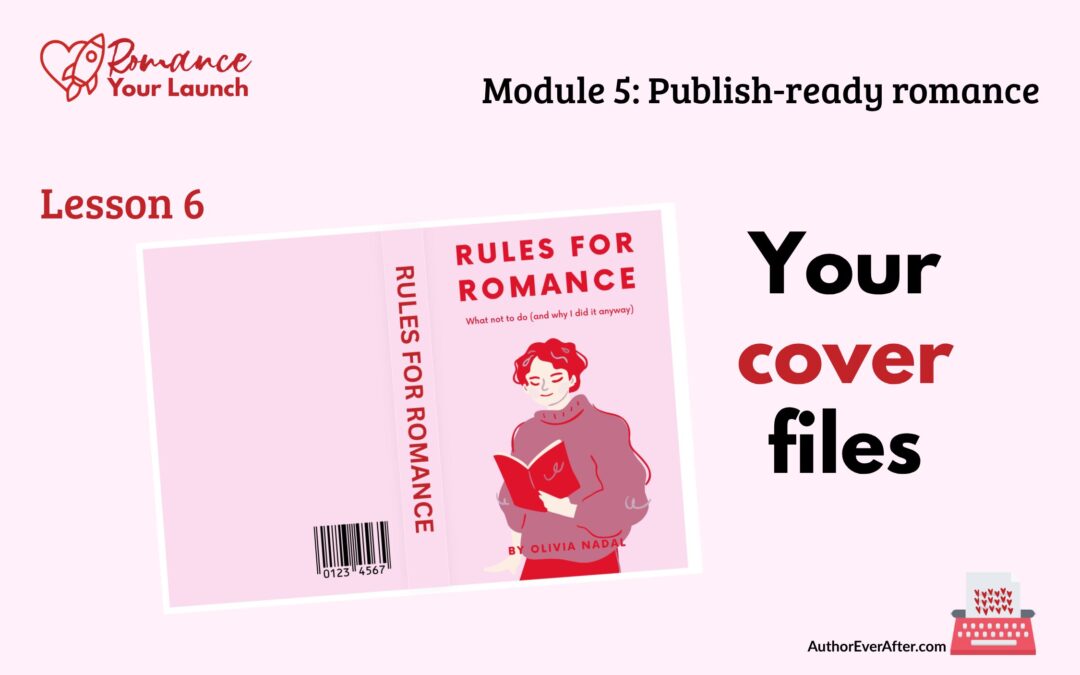
5.6 Book cover file specs for self-publishing authors
Book cover file specs for self-publishing authors Your cover designer has delivered your files. They're beautiful. You love them. You're ready to upload and get this book into the world. Understanding book cover file specs for self-publishing is the one thing standing...
5.5 Formatting check before you publish your romance novel
Your cover is beautiful. But a stunning cover file that fails a platform’s technical requirements can mean reprints, rejected uploads, or colours that shift dramatically between screen and print. Here’s how to get your book cover file specs right before anything goes live.
5.4 How to format a romance novel for self-publishing
Good formatting is invisible. Bad formatting costs you reviews you didn’t see coming. Here’s how to format a romance novel for self-publishing so your pages disappear and your readers stay in the story.
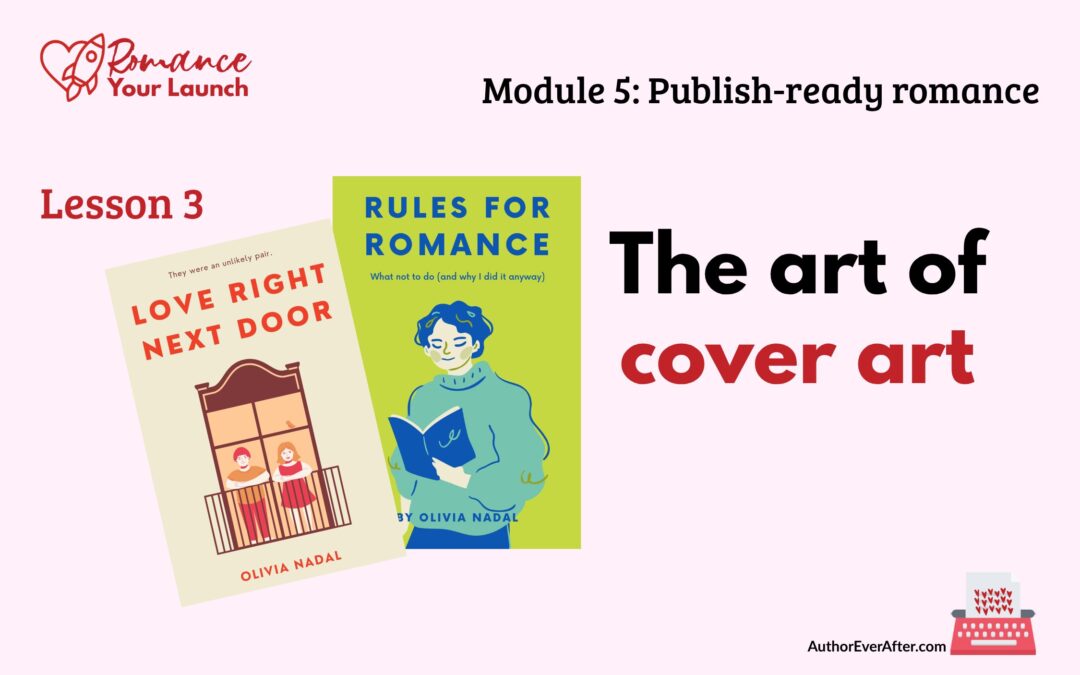
5.3 Romance book cover design guide for indie authors
Your feelings about what looks beautiful are almost beside the point. A romance cover is a signal, not self-expression. This romance book cover design guide shows you exactly what that signal needs to say and how to say it.

5.2 ISBNs for self-published authors: what you need to know
Before you upload your manuscript anywhere, you need to make one decision that affects every version of your book and every platform it lives on. Here’s what to know about ISBNs for self-published authors before you hit publish.

5.1 Romance novel metadata tips for self-published authors
Your book deserves to be found. But even a great romance novel stays invisible if your metadata isn’t doing its job. These romance novel metadata tips for self-published authors will help you get it right before you hit publish.
4.6 Final manuscript review before publishing your romance
“Almost there” is where a lot of authors stall out. In this lesson, you’ll walk through a final manuscript review before publishing so you can read like a reader, catch small issues that break immersion, and finally feel confident calling your romance done.

4.5 Line edit for a romance novel that feels polished
The line edit is where your romance stops feeling like a draft and starts feeling like a book. In this lesson, you’ll learn how to make your sentences clearer, sharper, and more intentional—without turning your voice into bland, beige prose.
4.4 Scene level edit for a romance novel that hits harder
Scene level edit for a romance novel that readers actually feel The structural edit asked whether your story works; the scene level edit for a romance novel asks whether your story feels. You've fixed the bones: the romance arc is present, the beats are in the right...

4.3 Structural edit for a romance novel that actually works
A structural edit is where you stop fussing over sentences and zoom all the way out to your romance as a whole. In this lesson, you’ll learn how to read your draft for structure, map the romance arc, and spot the big changes that will make everything you revise next actually worth the effort.
Ready for the next step in the module?
Return to Module 3: Find your first readers to see all five lessons.
Or go back to the Romance Your Launch home page to see all the modules and links to their hub pages.
Want the next lesson in your inbox?
This post is part of the Romance Your Launch series—a lesson-by-lesson guide to self-publishing your romance novel, written for pre-published and early career romance authors.
.
—> Click this link, drop in your name and email address, and I’ll send you two to three lessons a week, starting with Lesson 1.
.
—> If you’d rather just pick up where the series is, join my regular email list from this link.