
Email list setup for romance authors
An email list is the one part of your audience you actually own, and setting it up does not have to be complicated. In this lesson, you’ll walk through a simple email list setup for romance authors, connecting your lead magnet delivery to a clean subscriber list and a four‑email welcome sequence that introduces you like a pro.
Get your lead magnet into readers’ hands
Let’s keep this simple, because this topic can very quickly become the opposite of simple.
You have a lead magnet. Someone wants to download it. When they do, two things need to happen: they need to actually receive the file, and you need to capture their email address so you can stay in touch. Everything else, including sequences, segmentation, analytics, and list architecture, is covered in Module 8. This lesson is just about getting the mechanism in place so your lead magnet can do its job.
Two tools. One list. Four emails. That’s the whole task.
The two jobs your setup needs to do
Before you look at a single tool, it helps to understand what you’re actually trying to accomplish.
Job 1: Deliver the lead magnet.
When a reader clicks your download link, she needs to receive the file cleanly, formatted correctly for her device, and delivered in a way that feels professional and author-branded. This is not as simple as attaching a PDF to an email. Device compatibility, download reliability, and reader experience all matter, and a clunky delivery process undermines the goodwill your lead magnet is trying to build.
Job 2: Capture and store the email address.
When she downloads the file, you need her email address added to your list automatically so you can follow up with your welcome sequence. This is what turns a one-time download into the start of a reader relationship.
Some tools do both jobs in one place. Others split the work between two tools that talk to each other. Both approaches work. What matters is that you choose one and actually set it up.
Your options
Option A: SendFox
If you’re at the very beginning of your author career and you want a capable, clean email setup without a monthly subscription, SendFox is worth a look.
SendFox is available through AppSumo as a one-time payment of $49 for up to 5,000 subscribers, not a monthly fee and not an annual renewal. You pay once and it’s yours. For a new author who isn’t sure yet how quickly her list will grow or how long it will take to recoup any business investment, that’s genuinely different math from what most ESPs offer.
I used SendFox for my own list for five years. The deliverability is solid, the sign-up page is clean and professional, and the automations are straightforward to set up, which means your welcome sequence can do exactly what you need it to do at this stage. It’s not as feature-rich as MailerLite at the higher tiers, and the AppSumo deal is the main way to access it at that price point, so it’s worth checking whether the offer is still live when you’re reading this. But if it is, it’s one of the best-value options available for authors just getting started.
You can pair SendFox with StoryOrigin’s free plan for lead magnet delivery in the same way you would MailerLite. The integration works cleanly between the two.
Option B: MailerLite + StoryOrigin
This is the combination I’d point most on-a-budget writers toward in 2026, and it’s the setup I’d recommend you ask about first in the community.
MailerLite is your email service provider, or ESP. It’s the tool that stores your subscribers, sends your emails, and runs your welcome sequence. It’s well regarded for deliverability, has a clean and learnable interface, and is the ESP most commonly used by indie romance authors right now.
A few things to know before you sign up:
- The free plan supports up to 500 subscribers and 12,000 emails per month. That’s enough to get started, but you’ll hit the limit faster than you might expect if your lead magnet performs well.
- The free plan includes automation, landing pages, and forms, which are the things you actually need at this stage.
- It includes MailerLite branding on your emails until you upgrade, and upgrades start at $10 a month for 500 subscribers.
StoryOrigin handles the delivery side. It gives your reader a clean professional download page, manages device compatibility, and integrates directly with MailerLite so that when someone downloads your lead magnet, their email address is automatically added to your list.
Pricing:
- The free plan includes email service provider integration and unlimited file delivery, which means you can connect it to MailerLite and have the full delivery-to-list pipeline working at no cost.
- The Standard plan at $10 a month or $100 a year adds group promotions, newsletter swaps, ARC management, and other list-building tools you’ll want eventually, but you don’t need them right now.
StoryOrigin is also BookFunnel’s main competitor, and many romance authors use it because the free plan includes the email integration that BookFunnel reserves for higher-tier plans.
Option C: MailerLite + BookFunnel
BookFunnel is the better-known delivery tool, and it’s excellent, but the pricing structure changed in early 2026 and it’s worth understanding before you commit.
The First-Time Author plan is $30 a year and covers basic book delivery. However, email integration, the feature that automatically adds a downloader’s address to your MailerLite list, is only available on the Mid-List Author plan at $20 a month or $200 a year.
That’s a meaningful cost difference at the start of your author career, especially compared with StoryOrigin’s free integration tier. If you already have a BookFunnel account from a previous promotion and you’re on a plan that includes integrations, use it. If you’re starting from scratch, StoryOrigin’s pricing is much more beginner-friendly for this specific use case.
Option D: CrewFiction
CrewFiction is an all-in-one platform built specifically for fiction authors that handles email list management, lead magnet delivery, and reader community features in a single tool. If the idea of managing two separate platforms and an integration between them creates genuine anxiety, it’s worth a look.
The trade-off is that it’s newer and less widely used than MailerLite, SendFox, StoryOrigin, or BookFunnel. That means a smaller community of indie romance authors who can answer your questions, fewer tutorials, and less accumulated peer knowledge about what works for romance-specific use cases.
It’s not the wrong choice, but it is the one that asks you to figure more out on your own. That said, I recently moved my romance list from SendFox and BookFunnel to CrewFiction and I’ve been very happy with the service.
Option E: Ask your community first
I’ve given you suggestions from my own expeirence and that of many early career romance I know and have worked with. There are literally dozens of other ESPs you could use that I haven’t mentioned but that romance authors use. FloDesk, Kit, and even Substack come to mind. I’ve looked at those three and none do as good a job (for that money) that my recs do. In my opinion! So do your own research! Before you spend a single dollar or sign up for anything, post this question in a romance author community:
“What are you using to deliver your lead magnet and send your welcome emails, and if you were starting from scratch today, would you choose the same thing?”
The answer you get from authors in your specific sub-genre will tell you more than any comparison chart I (or anyone else) can make. People who write what you write, for readers like yours, have already made these decisions and learned from them. Use that.
This is not a reason to delay setting things up. It’s a reason to spend twenty minutes asking before you spend twenty hours figuring it out alone.
What you actually need set up right now
Once you’ve chosen your tools, here’s the full scope of what needs to exist before your lead magnet goes live. Nothing more.
One list.
Name it something simple: your author name, “readers,” or “newsletter.” Don’t overthink it.
One sign-up form or landing page connected to that list, with clear copy about what the reader is getting, the lead magnet, and what they can expect from you going forward, including a rough sense of how often you’ll email and what kind of emails you send.
One welcome sequence, four emails, triggered automatically when someone signs up:
- Email 1, sent immediately: deliver the lead magnet, say hello, set expectations, keep it short. Oh, and provide whitelist instructions to keep your email out of the dread Promotions tab on Gmail.
- Email 2, sent two to three days later: who you are and what you write. This is the email where you earn the relationship. Share something true about why you write romance, in your actual voice. And ask them to reply. The readers who reply are gold. Start a conversation.
- Email 3, sent three to four days later: what they can expect from your emails going forward, what you’ll send, roughly how often, and another invitation to reply and introduce themselves. I cannot express how valuable direct engagement with readers is. To many, you are a rock star because you’re a romance author. When you reply, it’s meaningful.
- Email 4, sent four to seven days later: your “why romance” email, the deeper human story behind your writing. Not marketing-speak. Just true. Please do not use a bot to write this email. Your human voice, even if it’s clunky, is far more valuable than a polished letter.
After Email 4, your subscribers roll into your regular list and start receiving whatever you send to everyone else. Module 8 goes deep on what that looks like. For now, you just need these four emails to exist and send automatically.
The one thing to resist:
Spending two weeks comparing tools instead of choosing one and starting.
MailerLite plus StoryOrigin on their free plans gives you a fully functional setup for zero dollars. Once you hit the 500 subscribers, if you’re still not ready to pay monthly, exporting your list and getting the $49 Sendfox account is super easy.
The best email setup is the one that exists before your lead magnet goes live. That’s the bar. You can optimize everything else later.
Key takeaway
Getting your email setup in place before your lead magnet goes live is one of the highest-value things you can do at this stage of your author career. The tools are more accessible and more affordable than they’ve ever been, and the four-email welcome sequence you build here will work quietly on your behalf every time a new reader downloads your story, introducing you, building trust, and turning a one-time download into a reader who’s genuinely looking forward to hearing from you again.
Join Author Ever After
You’ll get immediate and full access to the Romance Your Launch program (all 11 modules), a worksheet for every lesson, plus three weekly, small group support meetings to answer all your questions, and a freaking amazing community of pre-published and early career romance authors who are building their indie publishing careers alongside you.
Get more details about the community here.
Or, go straight to the application form.
Get every lesson in the Romance Your Launch course
—> Click this link and I’ll send you two to three lessons a week, starting with Lesson 1.
—>Or, join my regular email list if you’d rather just pick up from the current lesson.
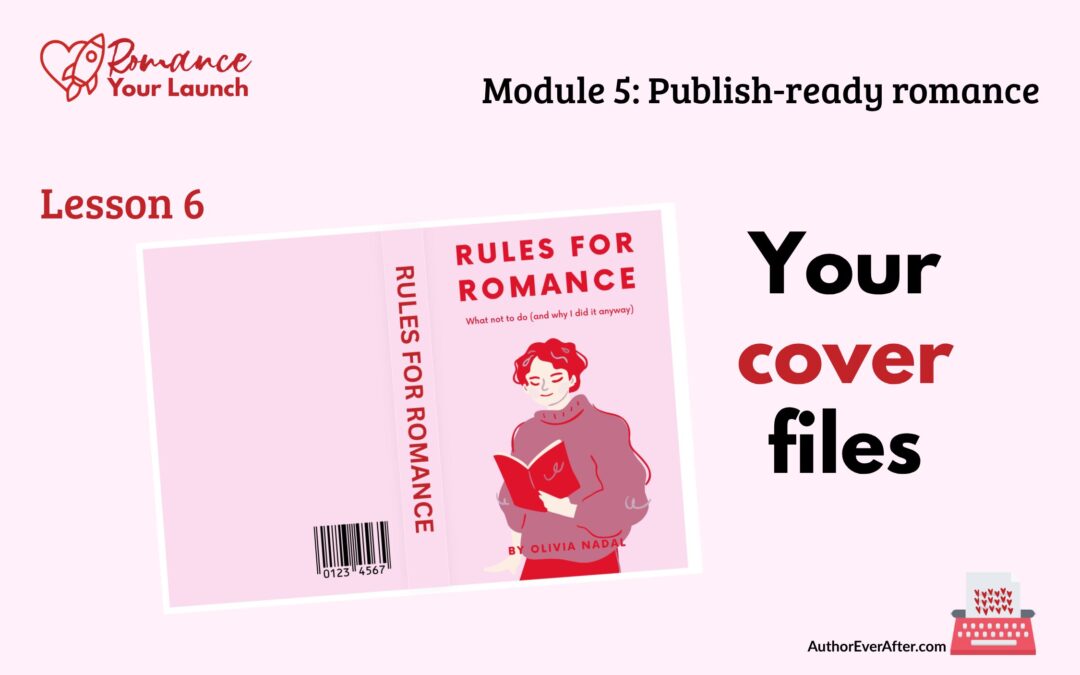
5.6 Book cover file specs for self-publishing authors
Book cover file specs for self-publishing authors Your cover designer has delivered your files. They're beautiful. You love them. You're ready to upload and get this book into the world. Understanding book cover file specs for self-publishing is the one thing standing...
5.5 Formatting check before you publish your romance novel
Your cover is beautiful. But a stunning cover file that fails a platform’s technical requirements can mean reprints, rejected uploads, or colours that shift dramatically between screen and print. Here’s how to get your book cover file specs right before anything goes live.
5.4 How to format a romance novel for self-publishing
Good formatting is invisible. Bad formatting costs you reviews you didn’t see coming. Here’s how to format a romance novel for self-publishing so your pages disappear and your readers stay in the story.
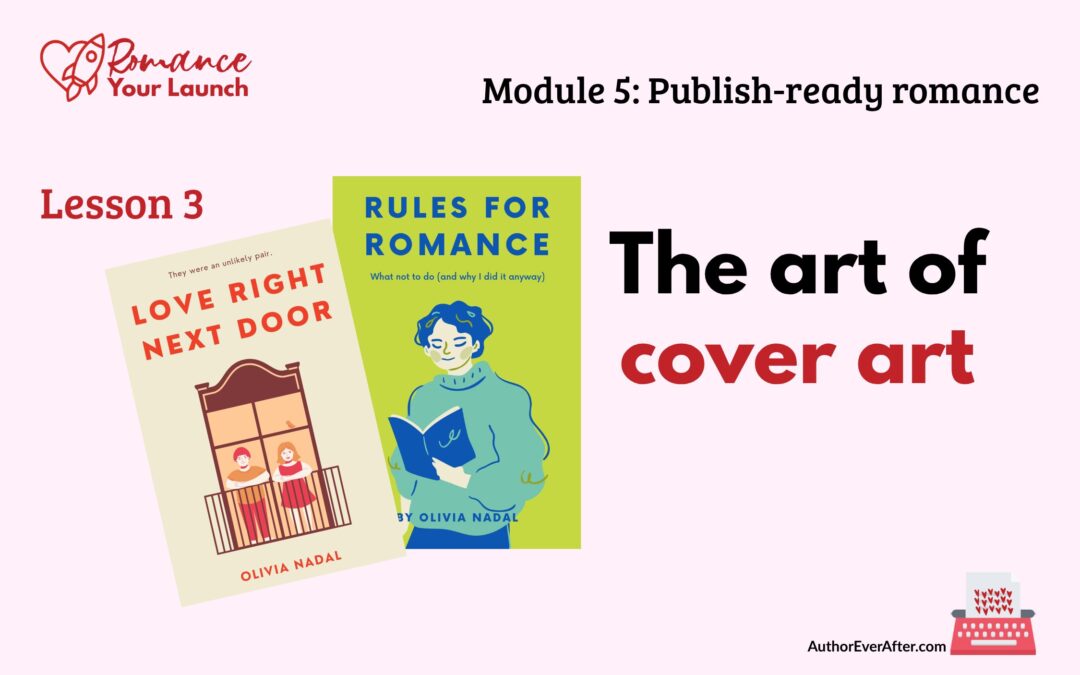
5.3 Romance book cover design guide for indie authors
Your feelings about what looks beautiful are almost beside the point. A romance cover is a signal, not self-expression. This romance book cover design guide shows you exactly what that signal needs to say and how to say it.

5.2 ISBNs for self-published authors: what you need to know
Before you upload your manuscript anywhere, you need to make one decision that affects every version of your book and every platform it lives on. Here’s what to know about ISBNs for self-published authors before you hit publish.

5.1 Romance novel metadata tips for self-published authors
Your book deserves to be found. But even a great romance novel stays invisible if your metadata isn’t doing its job. These romance novel metadata tips for self-published authors will help you get it right before you hit publish.
4.6 Final manuscript review before publishing your romance
“Almost there” is where a lot of authors stall out. In this lesson, you’ll walk through a final manuscript review before publishing so you can read like a reader, catch small issues that break immersion, and finally feel confident calling your romance done.

4.5 Line edit for a romance novel that feels polished
The line edit is where your romance stops feeling like a draft and starts feeling like a book. In this lesson, you’ll learn how to make your sentences clearer, sharper, and more intentional—without turning your voice into bland, beige prose.
4.4 Scene level edit for a romance novel that hits harder
Scene level edit for a romance novel that readers actually feel The structural edit asked whether your story works; the scene level edit for a romance novel asks whether your story feels. You've fixed the bones: the romance arc is present, the beats are in the right...

4.3 Structural edit for a romance novel that actually works
A structural edit is where you stop fussing over sentences and zoom all the way out to your romance as a whole. In this lesson, you’ll learn how to read your draft for structure, map the romance arc, and spot the big changes that will make everything you revise next actually worth the effort.

4.2 Beta readers for romance authors who want better books
Before you sink weeks into polishing sentences, you need to know if the story actually works for anyone who isn’t you. In this lesson, you’ll learn how to find and brief beta readers for romance authors so you get targeted, story-level feedback that makes revision easier instead of overwhelming.
Ready for the next step in the module?
Return to Module 3: Find your first readers to see all five lessons.
Or go back to the Romance Your Launch home page to see all the modules and links to their hub pages.
Want the next lesson in your inbox?
This post is part of the Romance Your Launch series—a lesson-by-lesson guide to self-publishing your romance novel, written for pre-published and early career romance authors.
.
—> Click this link, drop in your name and email address, and I’ll send you two to three lessons a week, starting with Lesson 1.
.
—> If you’d rather just pick up where the series is, join my regular email list from this link.