
How to define your romance reader avatar
Before you can sell a single book, you need to know exactly who you’re talking to. In this lesson, you’ll define a clear romance reader avatar so you stop trying to please “everyone” and start writing, branding, and marketing for the specific reader who will love your tropes, heat level, and emotional tone.
This lesson helps you answer that question in a way you can actually use.
Think of the module as five building blocks, each using the one before it:
- Your ideal reader, a clear picture of who you’re writing for and where she hangs out.
- Your lead magnet, a small strategic gift that gives those readers a reason to raise their hand.
- Your email setup, the automated system that delivers your magnet and starts the relationship.
- Your website, a simple welcoming home that makes signing up the obvious next step.
- Your social presence, the amplifier that sends the right readers toward everything you’ve built.
We start with the reader because the reader has to come first. Everything else is built around her.
Here’s the trap I see romance authors fall into over and over again at this stage:
they try to write for every romance reader.
They think the bigger the net, the more fish. I understand the impulse. You’ve worked hard on this book, you want as many people as possible to read it, and narrowing down can feel like leaving readers out.
But here’s what actually happens when you try to speak to all romance readers at once: you end up speaking clearly to none of them. Your blurb gets generic. Your cover sends mixed signals. Your social content is all over the place. And the readers who would have loved your book can’t quite tell it’s for them.
Getting specific about your reader isn’t about limiting your readership. It’s about making it easy for the right readers, the ones already inclined to love what you write, to recognize themselves in your covers, your bio, your blurbs, and your posts. That recognition builds trust quickly. And trust is what turns a first-time reader into someone who pre-orders your next book before she’s finished your first.
The many flavours of romance readers
Romance readers sort themselves, consciously or not, along a few key axes. Understanding those axes is the first step toward locating your corner of the readership.
Sub-genre
contemporary, small town, romcom, dark, romantic suspense, historical, romantasy, paranormal, sports, LGBTQ+, sapphic, MM, and more.
Heat level
closed door or sweet, low heat, medium or steamy, high or explicit, erotic.
Emotional tone
cozy, light, bantery, angsty, intense, dark, twisty, heart-wrenching but hopeful, uplifting, cathartic.
Tropes
enemies to lovers, grumpy/sunshine, second chance, forced proximity, single dad, fake dating, friends to lovers, fated mates, and so on.
Life stage and identity
age range such as new adult, midlife, or later in life; queer identities; cultural backgrounds; faith elements; disability and neurodivergence representation.
Most romance readers have a few home bases within those axes. Your goal isn’t to create a corporate marketing profile. It’s to answer one question honestly:
What kind of reader will feel at home with my books?
Start from your stories, not the market
Don’t reverse-engineer your ideal reader from trend lists. Start with what you actually write. Your stories already know who they’re for. Your job is to listen to them.
For your current work in progress or series, answer these:
Sub-genre
What shelf would this book sit on in a bookstore? Be as specific as you can. Not just “contemporary romance,” but “small-town steamy romcom,” “dark mafia romance with a slow-burn core,” or “cozy sapphic historical with low heat.”
Heat level
Using reader language, is it sweet or closed door, low, medium or steamy, spicy or explicit?
Emotional tone
Which three to five words best describe how this book feels? Cozy, chaotic, angsty, funny, dark, hopeful, cathartic, swoony, comforting?
Tropes
Which two to four major tropes does this book deliver? Not every beat, just the key selling points readers actually search for.
Core themes
What’s going on under the romance? Found family, grief and healing, class tension, mental health, body image, faith?
Once you have those answers, you’re not looking for “readers who like romance.” You’re looking for readers who enjoy your sub-genre, your heat level, your tone, and your core tropes or themes. That’s a real person you can actually find.
Build your reader snapshot
Now translate all of that into a simple reader snapshot. Not a demographic profile with age brackets and income ranges, just a clear sense of whose hands you want this book in.
You might not know her exact job or where she lives. But you can usually say what she reaches for when she needs comfort, what kind of emotional ride she’s up for on a random weeknight, and what she avoids. The avoids matter. A reader who hates heavy grief storylines and stumbles into yours because your blurb didn’t signal it is a one-star review waiting to happen.
Three examples to help you get your brain storming:
- “My ideal reader binges small-town series on KU, loves grumpy/sunshine and found family, wants on-page heat but not a ton of angst, and prefers to cry happy tears, not ugly sobs.”
- “My ideal reader hangs out in dark romance Facebook groups, loves morally grey anti-heroes, doesn’t mind content warnings, and wants to be emotionally wrecked and then rebuilt.”
- “My ideal reader is hungry for sapphic historicals with real stakes but insists on a solid HEA, loves lush prose, and wants to feel both rage at the constraints and satisfaction at the win.”
Notice what’s in each of these: what they binge, what they avoid, and what emotional promise they’re hoping you can keep. That’s your target. Everything in this module points back to it.
What job are your readers hiring your book to do?
When a romance reader chooses her next book, she’s hiring it for a job, whether she thinks about it that way or not. To comfort her. To distract her during a stressful week. To give her cathartic tears. To give her heat without a lot of emotional labour. To let her live out a darker fantasy in a safe container. To give her hope that love like this exists.
Ask yourself: what job is my book best suited for? What kind of reader is actively looking for that job to be done?
- Cozy, trope-forward, series-based books are hired for comfort and familiarity.
- High-angst, trauma-healing, dark-but-hopeful books are hired for catharsis.
- High-heat, bantery, escapist books are hired for fun and fantasy.
Knowing this helps you describe your book to the right reader and, just as importantly, helps you avoid attracting readers who will be disappointed by what they find. Disappointed readers leave reviews. You want the reader who is delighted by exactly what you wrote.
Key takeaway
You’re not trying to attract every romance reader. You’re trying to make it unmistakably easy for the right readers, the ones already inclined to love what you write, to recognize themselves in everything you create.
The reader snapshot you’ve built here isn’t a cage. It’s a compass. Every decision in Module 3 points back to it.
Join Author Ever After
You’ll get immediate and full access to the Romance Your Launch program (all 11 modules), a worksheet for every lesson, plus three weekly, small group support meetings to answer all your questions, and a freaking amazing community of pre-published and early career romance authors who are building their indie publishing careers alongside you.
Get more details about the community here.
Or, go straight to the application form.
Get every lesson in the Romance Your Launch course
—> Click this link and I’ll send you two to three lessons a week, starting with Lesson 1.
—>Or, join my regular email list if you’d rather just pick up from the current lesson.
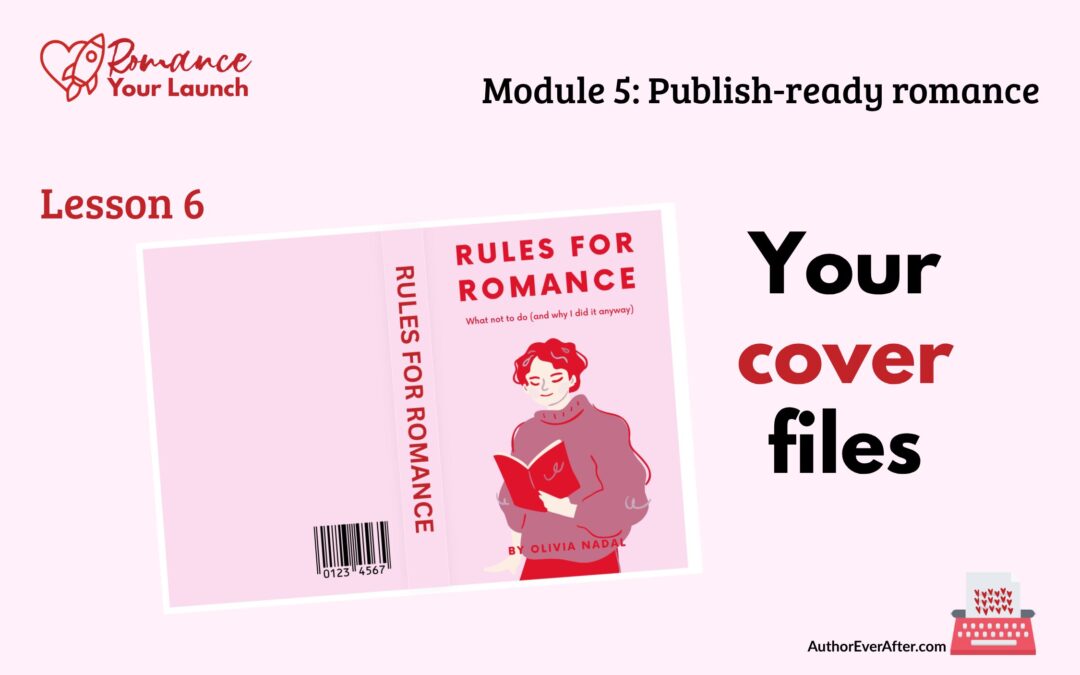
5.6 Book cover file specs for self-publishing authors
Book cover file specs for self-publishing authors Your cover designer has delivered your files. They're beautiful. You love them. You're ready to upload and get this book into the world. Understanding book cover file specs for self-publishing is the one thing standing...
5.5 Formatting check before you publish your romance novel
Your cover is beautiful. But a stunning cover file that fails a platform’s technical requirements can mean reprints, rejected uploads, or colours that shift dramatically between screen and print. Here’s how to get your book cover file specs right before anything goes live.
5.4 How to format a romance novel for self-publishing
Good formatting is invisible. Bad formatting costs you reviews you didn’t see coming. Here’s how to format a romance novel for self-publishing so your pages disappear and your readers stay in the story.
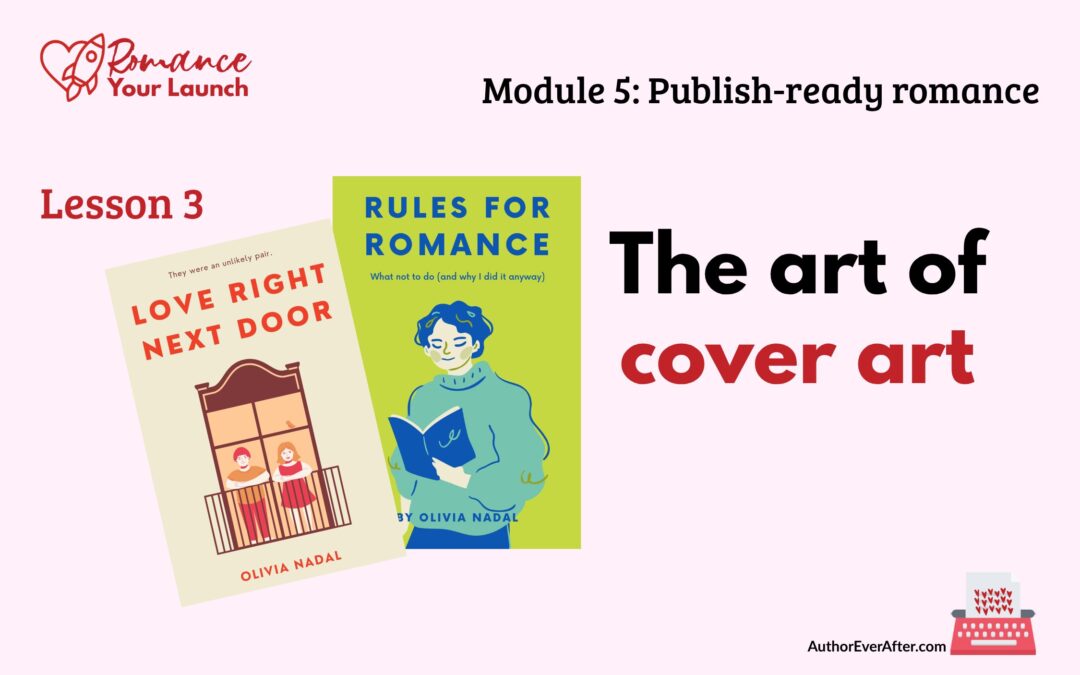
5.3 Romance book cover design guide for indie authors
Your feelings about what looks beautiful are almost beside the point. A romance cover is a signal, not self-expression. This romance book cover design guide shows you exactly what that signal needs to say and how to say it.

5.2 ISBNs for self-published authors: what you need to know
Before you upload your manuscript anywhere, you need to make one decision that affects every version of your book and every platform it lives on. Here’s what to know about ISBNs for self-published authors before you hit publish.

5.1 Romance novel metadata tips for self-published authors
Your book deserves to be found. But even a great romance novel stays invisible if your metadata isn’t doing its job. These romance novel metadata tips for self-published authors will help you get it right before you hit publish.
4.6 Final manuscript review before publishing your romance
“Almost there” is where a lot of authors stall out. In this lesson, you’ll walk through a final manuscript review before publishing so you can read like a reader, catch small issues that break immersion, and finally feel confident calling your romance done.

4.5 Line edit for a romance novel that feels polished
The line edit is where your romance stops feeling like a draft and starts feeling like a book. In this lesson, you’ll learn how to make your sentences clearer, sharper, and more intentional—without turning your voice into bland, beige prose.
4.4 Scene level edit for a romance novel that hits harder
Scene level edit for a romance novel that readers actually feel The structural edit asked whether your story works; the scene level edit for a romance novel asks whether your story feels. You've fixed the bones: the romance arc is present, the beats are in the right...
Ready for the next step in the module?
Return to Module 3: Find your first readers to see all five lessons.
Or go back to the Romance Your Launch home page to see all the modules and links to their hub pages.
Want the next lesson in your inbox?
This post is part of the Romance Your Launch series—a lesson-by-lesson guide to self-publishing your romance novel, written for pre-published and early career romance authors.
.
—> Click this link, drop in your name and email address, and I’ll send you two to three lessons a week, starting with Lesson 1.
.
—> If you’d rather just pick up where the series is, join my regular email list from this link.