
Your romance author brand style guide
In Lesson 2, you did the inner work: values, traits, and the author persona that sits at the emotional core of everything you create. That work was the foundation. Now we build on it.
This lesson is about translating all of that internal clarity into the visual and verbal decisions readers will actually see: your photo or logo, your colours, your fonts, your imagery, and the way you sound when you show up online. By the end of the worksheet, you’ll have a starter romance author brand style guide you can bring into every creative and marketing decision that follows.
Why you need a simple brand style guide
A brand style guide sounds fancier than it needs to be. For our purposes, it’s just a short document where you capture a handful of decisions… your primary visual, your colours, your fonts, your imagery style, your voice, and where you’ll show up on social media. That’s it. One document. Five to ten decisions.
Here’s why it’s worth doing before you design a single thing:
Consistency
When your visuals are consistent, readers start to recognize your posts, emails, and covers at a glance. Recognition builds trust, and trust builds readers.
Credibility
A cohesive look signals that you take your author business seriously, before someone has even read a word you’ve written. It’s a probably mostly subconscious signal that is especially important in the age of AI.
Speed
When you already know your colours and fonts, and how you want to make readers feel, creating graphics or briefing a cover designer takes a fraction of the time.
Emotional connection
The right visuals amplify the feelings you want readers to have. A cozy small-town romcom should look and feel completely different from a dark mafia romance, and your brand should do some of that work before anyone reads your webpage or a single social media post.
Differentiation
In a genre as competitive as romance, a distinct look and feel is one of the fastest ways to stop the scroll.
None of this locks you in forever. You’re building a solid starting point you can and will evolve over time. Think of it as giving your author identity a coherent outfit to wear… not a uniform.
Your primary visual—photo, logo, or signature
Readers connect with people more than logos. For most romance authors, your face is your most effective brand visual, because people buy from people they feel they know, and a photo does that work faster than any logo or signature ever will.
That said, you get to decide what you’re comfortable with. Your primary visual could be:
- A professional or well-lit casual author photo
- A simple logo (your name in a distinctive script, for instance)
- A stylized signature
- A recent book cover as your profile image
Once you’ve chosen, you’ll also want to decide where each version will live: social media profiles, your website header, your email footer. The same photo doesn’t have to be cropped identically everywhere, but it should be recognizably, consistently you.
Don’t overcomplicate this. Pick something you’re comfortable with that feels aligned with the persona you named in Lesson 2, and move on. You can update your photo if or when the one you pick starts to feel “off”. For now, consistency matters more than perfection.
Colours—the emotional palette of your brand
Colours are emotion in shorthand. Before a reader reads a single word on your website or social feed, they’ve already had a feeling… and your colour palette is doing a lot of that work.
Think about what passionate reds and rich jewel tones say versus soft pastels and gentle neutrals. Dark, moody palettes with gold accents tell a completely different story than clean, modern monochrome with one bold pop of colour. None of these are better or worse, but they need to match what your books are actually promising.
For your brand palette, you’re aiming for:
- 2–3 core brand colours (these show up everywhere—know their hex codes)
- 2–3 accent colours (used sparingly for contrast and emphasis)
Two tools that are genuinely useful here: Coolors.com for building and experimenting with palettes (watch their tutorial before you start. It will save you considerable frustration), and Color-Hex.org for exploring complementary colours once you have one you love.
You’re not designing a book cover. You’re choosing a palette you’ll reuse on your website, your social graphics, and possibly in your cover briefs. Keep it tight. Three core colours is plenty.
Fonts—the voice of your visuals
Fonts are another way your brand speaks before anyone reads a word.
Look at the covers in your sub-genre and you’ll start to see patterns almost immediately. Historical romance reaches for flowing scripts and elegant serifs. Dark romance leans into bold, angular, or condensed type. Small-town and cozy contemporary tends toward softer, friendlier typefaces. Your fonts don’t have to match your sub-genre exactly, but they shouldn’t contradict it either.
Aim for three:
- One script or display font—for accents, headers, and anything decorative
- One serif font—for a more classic, readable feel
- One sans serif font—for clean, modern text and body copy
You won’t use all three in every context. But knowing the general vibe… curvy and romantic, clean and modern, bold and gritty… keeps your visuals cohesive even when you’re working quickly in Canva at 10pm.
For font pairing resources, Google “font pairing websites” and you’ll find dozens of free tools. Google Fonts are a solid place to start since they’re free, widely available, and render well online.
Imagery—the pictures your brand paints
There are dozens of imagery styles you could lean into. You only need the two or three that actually support your brand… the ones that, when you look at them, make you think yes, that’s my world.
A few of the most common styles in romance author branding:
Vintage or nostalgic.
Sepia tones, lace patterns, historical imagery. Works beautifully for historical and Regency romance.
Minimalist and clean.
Simple, uncluttered design for a modern, sophisticated feel. Strong for contemporary and chick-lit.
Bold and dramatic.
Intense colours, strong contrasts, striking visuals. Great for romantic suspense, sports romance, dark romance.
Floral and nature-inspired.
Botanical motifs, natural landscapes, warmth and growth. Perfect for small-town and rural romance.
Soft and romantic.
Pastel colours, soft lighting, tender visuals. Ideal for sweet romance and inspirational romance.
Dark and mysterious.
Darker palettes, enigmatic imagery, a sense of danger or seduction. Mafia, gothic, dark romance.
Rustic and cozy.
Wood textures, warm tones, comfort imagery. Made for small-town romance and western romance.
Sensual and seductive.
Passion and heat without necessarily being explicit. Steamy contemporary, erotic romance.
Whimsical and quirky.
Playful, unconventional, full of personality. Romcom, young adult romance.
Fantasy or paranormal.
Magical, otherworldly, imaginative. Romantasy, paranormal, time travel.
Luxurious and opulent.
Jewel tones, gold accents, ornate details. Billionaire romance.
Retro or pop-culture-inspired.
Nostalgic fun, drawn from specific decades or pop culture moments. Romcom, light contemporary.
Pick the two or three that feel like a natural fit for both your sub-genre and the brand words you landed on in Lesson 2. If your brand keywords are “cozy, hopeful, small-town, found family”… you’re not reaching for dark and mysterious. Trust the alignment.
If you’re an Author Ever After member, you’re invited to find (and request for free) up to 10 images on DepositPhotos that match your brand for use on your website, socials, or wherever else you need them.
Voice, tone, and brand messaging
Your visual branding needs to match your verbal branding… the way you sound in your emails, your social captions, and your back-cover copy. A dark, moody visual palette paired with a warm, breezy, self-deprecating email voice sends a mixed signal. Readers notice that dissonance even when they can’t name it.
In the worksheet, you’ll describe your author voice in a few sentences. Not your book’s voice. Your author voice. The one readers encounter in your newsletter and your Instagram captions.
- Is it warm and a little sweary?
- Dark and lyrical?
- Cozy and funny?
- Blunt and encouraging?
Be honest, not aspirational.
You’ll also think about:
- Do you swear in your public-facing content?
- How formal or casual is your sentence structure?
- What role do you play in your readers’ lives… the big sister, the chaotic friend, the wise mentor, the quiet observer?
And you’ll pull forward the brand keywords from Lesson 2 as messaging anchors. These are the words and ideas you want coming through again and again in everything you write that isn’t a novel.
Your first brand mood board
This is the step people either love immediately or resist with their whole body. Do it anyway. It works.
A mood board is a visual shorthand for this is what my brand feels like. It’s not a marketing asset. It’s a reference tool… something you look at when you’re writing a social caption or briefing a cover designer and need to quickly recalibrate.
Aim for around 30 images that capture:
- Your chosen colours and the textures or gradients that feel right with them
- Fonts or type styles that feel aligned with your brand vibe
- Moments, places, objects, and patterns that feel “on brand”
- Emotions and moods you want readers to feel
Pinterest is the easiest tool for this. Create a secret board and pin without overthinking. If you search for [your mood] mood board, you’ll find hundreds of results to spark ideas. Canva also has a brand board template if you prefer to work there.
Don’t aim for perfection. Aim for this feels like me and my books. You can always delete an image later. Trust your gut when something makes you stop scrolling. That’s usually the right call.
Key takeaway
Your brand look and feel doesn’t have to be perfect. It just has to be coherent enough that you feel like yourself when you use it, and readers can start to recognize your work at a glance. You can and will refine over time.
For now, you’ve given your stories an outfit that fits. That’s more than enough to move forward confidently into Module 3.
Join Author Ever After
You’ll get immediate and full access to the Romance Your Launch program (all 11 modules), a worksheet for every lesson, plus three weekly, small group support meetings to answer all your questions, and a freaking amazing community of pre-published and early career romance authors who are building their indie publishing careers alongside you.
Get more details about the community here.
Or, go straight to the application form.
Get every lesson in the Romance Your Launch course
—> Click this link and I’ll send you two to three lessons a week, starting with Lesson 1.
—>Or, join my regular email list if you’d rather just pick up from the current lesson.
5.6 Book cover file specs for self-publishing authors
Book cover file specs for self-publishing authors Your cover designer has delivered your files. They're beautiful. You love them. You're ready to upload and get this book into the world. Understanding book cover file specs for self-publishing is the one thing standing...
5.5 Formatting check before you publish your romance novel
Your cover is beautiful. But a stunning cover file that fails a platform’s technical requirements can mean reprints, rejected uploads, or colours that shift dramatically between screen and print. Here’s how to get your book cover file specs right before anything goes live.
5.4 How to format a romance novel for self-publishing
Good formatting is invisible. Bad formatting costs you reviews you didn’t see coming. Here’s how to format a romance novel for self-publishing so your pages disappear and your readers stay in the story.
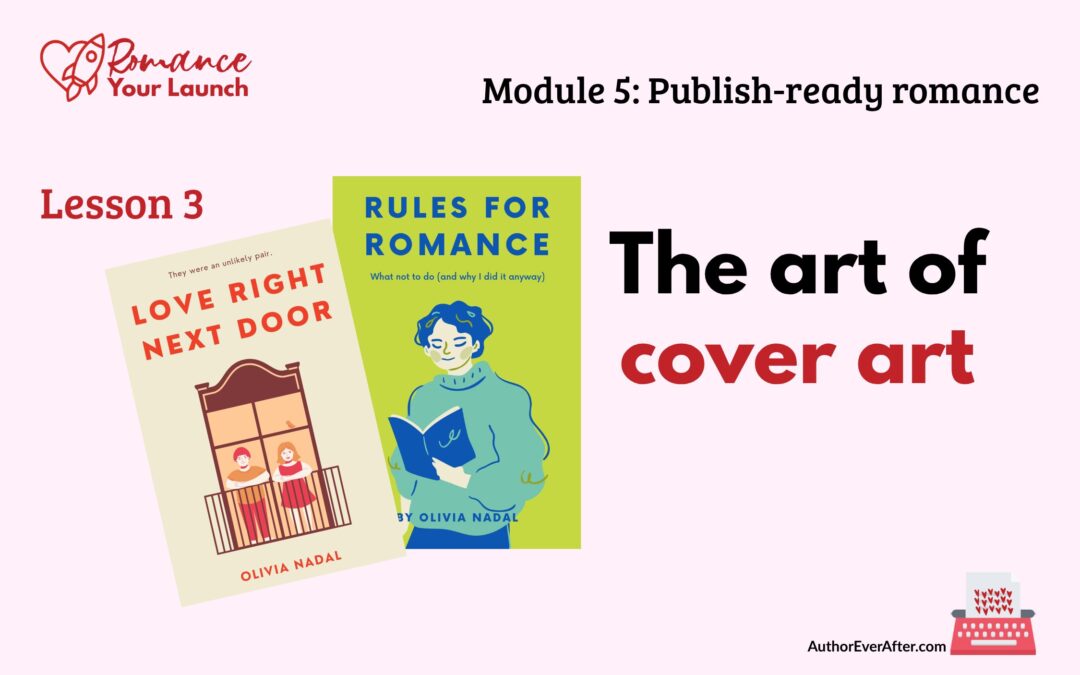
5.3 Romance book cover design guide for indie authors
Your feelings about what looks beautiful are almost beside the point. A romance cover is a signal, not self-expression. This romance book cover design guide shows you exactly what that signal needs to say and how to say it.

5.2 ISBNs for self-published authors: what you need to know
Before you upload your manuscript anywhere, you need to make one decision that affects every version of your book and every platform it lives on. Here’s what to know about ISBNs for self-published authors before you hit publish.

5.1 Romance novel metadata tips for self-published authors
Your book deserves to be found. But even a great romance novel stays invisible if your metadata isn’t doing its job. These romance novel metadata tips for self-published authors will help you get it right before you hit publish.
4.6 Final manuscript review before publishing your romance
“Almost there” is where a lot of authors stall out. In this lesson, you’ll walk through a final manuscript review before publishing so you can read like a reader, catch small issues that break immersion, and finally feel confident calling your romance done.
Ready for the next module?
Go back to the Romance Your Launch home page to see all the modules and links to their hub pages.
Want the next lesson in your inbox?
This post is part of the Romance Your Launch series—a lesson-by-lesson guide to self-publishing your romance novel, written for pre-published and early career romance authors.
.
—> Click this link, drop in your name and email address, and I’ll send you two to three lessons a week, starting with Lesson 1.
.
—> If you’d rather just pick up where the series is, join my regular email list from this link.