
Self-editing tips for romance authors who want more readers
Self-editing tips for romance authors are not about beating yourself up for an imperfect first draft; they’re about giving your love story a second life with a clearer head, a sharper eye, and a plan. When you approach self-editing with intention, you move from “I wrote a book” to “I wrote a book romance readers can actually sink into,” and that shift is what builds a career instead of a single title.
What self-editing is (and is not)
Self-editing is not a process designed to expose everything you did wrong, strip your voice from your writing, or make you wish you had never started the book. It’s not a referendum on your talent or an argument for why you should stop writing. self-editing is the stage where you decide you care enough about your future readers to make their experience inside your story as immersive and emotionally satisfying as you can.
This particular lesson is not about the detailed stages of editing; structural work, scene-level edits, and line editing all have their own place in the process. Here, you’re setting up the habits, tools, and mindset that will make those later stages calmer, faster, and more effective. Think of this as preparing your editing workspace and your writer brain before you dig into the manuscript itself.
Step away before you start fixing
When you’ve just finished a draft, your brain is still inside the story. It knows what you meant to write on every page, which means it will read what you meant instead of what is actually there. That is a great trait while you’re drafting and a real obstacle when you’re trying to edit like a reader who paid for the book and wants to be swept away.
The most effective self-editing tip for romance authors at this stage is simple: step away from the manuscript. A few days is the minimum; a couple or few weeks is better. During that time, read for pleasure in or near your sub-genre so your sense of how a satisfying romance reads stays fresh without being tangled up with your own story. Do non-writing activities that genuinely restore you, and resist the urge to “just peek” at your pages.
When you come back to the draft, change how the pages look so your brain cannot rely on memory. Adjust the font, bump up the size, or print a section out. Your brain is excellent at pattern matching familiar text; making the words look unfamiliar helps you see what is actually there. Then read a section without a pen in your hand. Notice where you get bored, feel confused, or feel something in your chest. That honest reaction is the compass you’ll use through the rest of your self-editing.
Use tools as helpers, not the boss
Editing tools can be useful companions when you self-edit, as long as you remember that none of them understands romance the way you do. Programs such as ProWritingAid, AutoCrit, or the checker in your word processor can highlight obvious typos, repeated words, and needlessly long or tangled sentences. They can surface habits you might not notice on your own, like leaning on “suddenly,” “just,” or overusing certain punctuation.
Text-to-speech is one of the most underrated self-editing tips for romance authors. Letting a synthetic voice read your chapter back to you will reveal missing words, clumsy rhythms, and emotional beats that don’t land; your eyes tend to glide right past those issues on the screen.
What these tools cannot do is understand romance beats, emotional nuance, pacing that serves tension, or the specific voice that makes your stories yours. They will mark your heroine’s internal monologue as passive and suggest that you cut a paragraph that carries the emotional heart of the scene because it contains a fragment. The tools are not wrong inside their own rules, but they are not qualified to tell you how to write romance. You are in charge. The tool is a flashlight you shine on the work, not the editor who makes decisions.
Invite feedback without handing over control
Even in a module about self-editing, you’re not meant to carry the entire quality control role by yourself. Trying to be the only set of eyes on your book from rough draft to publication is one of the most common and most expensive mistakes new romance authors make, especially if your goal is to find readers who will follow you from book to book.
We’ll dig into beta readers in more depth later, but for now, focus on finding one or two people who can give you early, big picture impressions of whether the story is working. Look for a critique partner who reads romance, a fellow author in your sub-genre, or a voracious romance reader who can tell you honestly where she got bored, confused, or emotionally disconnected from the central couple.
When you ask for feedback, ask specific questions instead of “What did you think.” Open-ended questions tend to produce polite but vague answers. Ask them to highlight the exact sentence where they felt confused, where they started to skim, and places where one of the main characters didn’t act in character or was not likable. Those questions give you feedback you can actually use inside your self-editing process.
Then treat feedback as information, not instruction. Notes from readers are data about their experience, not a list of orders you’re required to follow. If a suggestion clashes with the story you’re trying to tell, you are allowed to take it seriously and still decide not to act on it. That is not stubborn; that is you stepping into authorship.
Protect your heart while you improve the work
Self-editing requires you to hold two truths at the same time: you wrote something worth improving and it is not yet as strong as it could be. That gap between the draft you have and the book you can see in your mind is uncomfortable. For many romance authors, this space is where the inner critic shows up and insists that the work proves you’re not cut out for this.
The existence of a gap is not evidence of failure; it is simply the nature of drafts. Every romance novel you love began as a messy first pass that needed attention. The distance between your rough draft and the book your readers will fall for is normal. The distance is the work.
This is where emotional resilience matters. You can acknowledge real issues in your manuscript while refusing to link them to your worth as a writer or a person. You can collect self-editing tips for romance authors, use them, and still write in your own voice. Your goal is not perfection. Your goal is to make the reading experience smoother, clearer, and more emotionally satisfying for the people who will meet your characters on the page.
Key takeaway
Self-editing is not you “fixing” a failed draft; it’s you giving your romance a second life so readers can actually sink into the story you meant to tell. When you step away from the manuscript, use tools as support instead of a boss, invite targeted feedback, and protect your writer heart, you make the gap between messy draft and satisfying book smaller—and a lot more survivable.
Join Author Ever After
You’ll get immediate and full access to the Romance Your Launch program (all 11 modules), a worksheet for every lesson, plus three weekly, small group support meetings to answer all your questions, and a freaking amazing community of pre-published and early career romance authors who are building their indie publishing careers alongside you.
Get more details about the community here.
Or, go straight to the application form.
Get every lesson in the Romance Your Launch course
—> Click this link and I’ll send you two to three lessons a week, starting with Lesson 1.
—>Or, join my regular email list if you’d rather just pick up from the current lesson.
This lesson is part of Module 4: Revise & shine in the Romance Your Launch program.
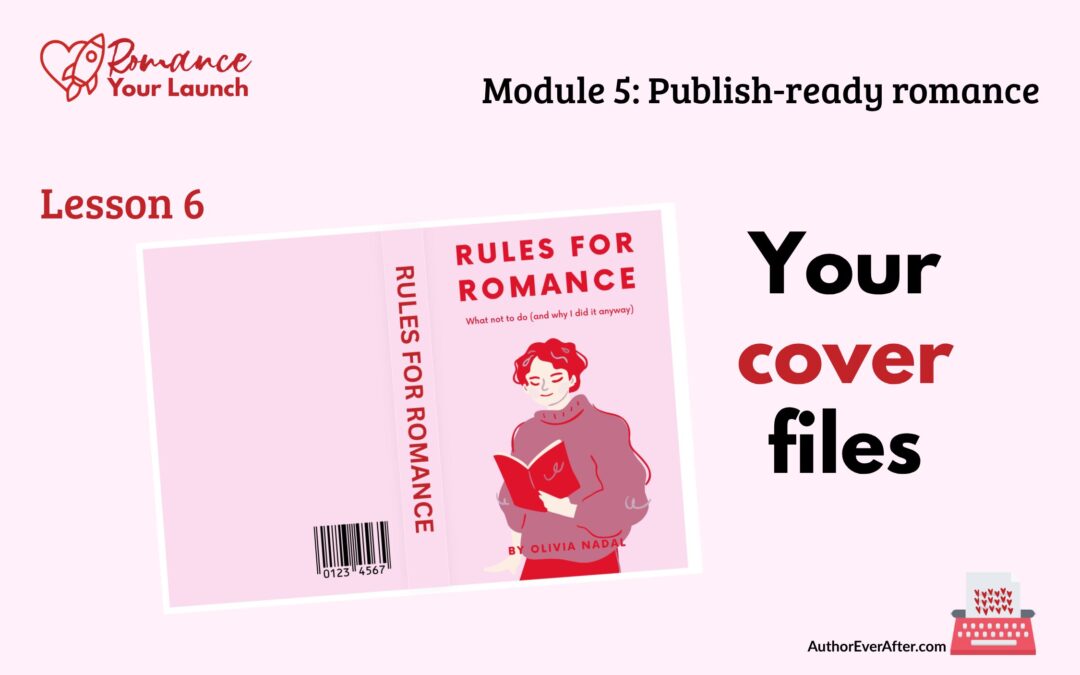
5.6 Book cover file specs for self-publishing authors
Book cover file specs for self-publishing authors Your cover designer has delivered your files. They're beautiful. You love them. You're ready to upload and get this book into the world. Understanding book cover file specs for self-publishing is the one thing standing...
5.5 Formatting check before you publish your romance novel
Your cover is beautiful. But a stunning cover file that fails a platform’s technical requirements can mean reprints, rejected uploads, or colours that shift dramatically between screen and print. Here’s how to get your book cover file specs right before anything goes live.
5.4 How to format a romance novel for self-publishing
Good formatting is invisible. Bad formatting costs you reviews you didn’t see coming. Here’s how to format a romance novel for self-publishing so your pages disappear and your readers stay in the story.
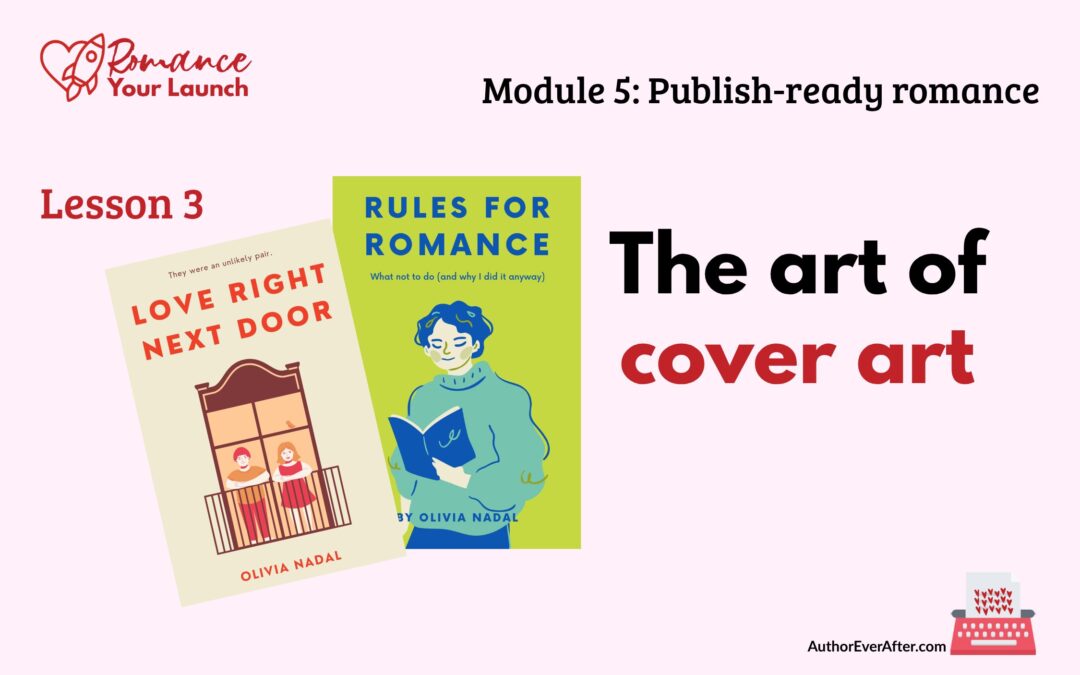
5.3 Romance book cover design guide for indie authors
Your feelings about what looks beautiful are almost beside the point. A romance cover is a signal, not self-expression. This romance book cover design guide shows you exactly what that signal needs to say and how to say it.

5.2 ISBNs for self-published authors: what you need to know
Before you upload your manuscript anywhere, you need to make one decision that affects every version of your book and every platform it lives on. Here’s what to know about ISBNs for self-published authors before you hit publish.

5.1 Romance novel metadata tips for self-published authors
Your book deserves to be found. But even a great romance novel stays invisible if your metadata isn’t doing its job. These romance novel metadata tips for self-published authors will help you get it right before you hit publish.
4.6 Final manuscript review before publishing your romance
“Almost there” is where a lot of authors stall out. In this lesson, you’ll walk through a final manuscript review before publishing so you can read like a reader, catch small issues that break immersion, and finally feel confident calling your romance done.

4.5 Line edit for a romance novel that feels polished
The line edit is where your romance stops feeling like a draft and starts feeling like a book. In this lesson, you’ll learn how to make your sentences clearer, sharper, and more intentional—without turning your voice into bland, beige prose.
4.4 Scene level edit for a romance novel that hits harder
Scene level edit for a romance novel that readers actually feel The structural edit asked whether your story works; the scene level edit for a romance novel asks whether your story feels. You've fixed the bones: the romance arc is present, the beats are in the right...

4.3 Structural edit for a romance novel that actually works
A structural edit is where you stop fussing over sentences and zoom all the way out to your romance as a whole. In this lesson, you’ll learn how to read your draft for structure, map the romance arc, and spot the big changes that will make everything you revise next actually worth the effort.

4.2 Beta readers for romance authors who want better books
Before you sink weeks into polishing sentences, you need to know if the story actually works for anyone who isn’t you. In this lesson, you’ll learn how to find and brief beta readers for romance authors so you get targeted, story-level feedback that makes revision easier instead of overwhelming.
3.5 Social media strategy for romance authors
You do not need to be everywhere online to sell romance. In this lesson, you’ll choose one platform, decide what you actually want social media to do for your career, and build a sustainable posting rhythm that turns curiosity into clicks on your lead magnet.
3.4 Simple romance author websites
Your author website doesn’t have to impress anyone. It has to exist and give readers one clear place to go. In this lesson, you’ll pick an easy platform, claim your URL, write your copy, and build a simple, on‑brand home that points straight to your books and your list.
3.3 Email list setup for romance authors
Followers belong to the platform. Your list belongs to you. In this lesson, you’ll connect your lead magnet to a clean email setup and draft a four‑email welcome sequence so every new romance reader is welcomed, warmed up, and ready when you launch your book.
Need to go back to a previous lesson?
Return to Module 4: Revise & Shine to see all six lessons.
Or go back to the Romance Your Launch home page to see all the modules and links to their hub pages.
Want the next lesson in your inbox?
This post is part of the Romance Your Launch series—a lesson-by-lesson guide to self-publishing your romance novel, written for pre-published and early career romance authors.
.
—> Click this link, drop in your name and email address, and I’ll send you two to three lessons a week, starting with Lesson 1.
.
—> If you’d rather just pick up where the series is, join my regular email list from this link.