
Identify your romance author niche and target audience
Picture the reader who would love your book so much she’d read it in one sitting, text her best friend about it at midnight, and leave a five‑star review before she’s even finished her coffee the next morning. She’d follow you on Instagram, sign up for your email list, and pre‑order your next book the day you announced it. She is your ideal reader, and every decision in this lesson is designed to help you find her and define the romance author niche you write in.
Niche and target audience work sounds dry and business‑y. What it actually is, is a love story between your book and the reader who’s been waiting for it.
What “niche” actually means
In Lesson 2 we talked about sub-genres and tropes. Your niche goes one level deeper. It’s the specific intersection of sub-genre, tone, heat level, setting, character type, and reader values that makes your book yours and not anyone else’s.
Here’s an example. “Contemporary romance” is a sub-genre. “Small-town romance” is a sub-sub-genre. But your niche might be small-town romance featuring women over 40 who are rebuilding their lives, with a warm heat level and a strong found-family element. That’s a niche. And there are readers out there who are hungry for exactly that combination and will follow an author who delivers it consistently.
Niching down can feel scary — like you’re making your potential audience smaller. I want to offer you a different way to think about it: niching down makes your signal stronger. The more clearly you describe your book’s address in the romance market, the easier it is for the right reader to find you. And the right reader is always worth a hundred casual browsers.
Start with your book, not a trend
One of the most common mistakes new romance authors make is trying to reverse-engineer their book to fit whatever sub-genre is trending on BookTok this month. I understand the impulse. You see romantasy taking over every feed and you think, should I add some fae to my contemporary?
Please don’t.
Readers can feel the difference between a story written from genuine passion and a story written to chase a trend. And by the time you’ve finished writing, editing, and launching — which takes months, at minimum — that trend may have already shifted. The authors winning in trending sub-genres are almost always the ones who genuinely love what they’re writing and had been writing it before it became the hot thing. Ali Hazelwood wasn’t chasing a trend when she wrote slow-burn academic romance with STEM heroines. She wrote what she loved, and the market came to her.
Your niche lives in the book you wrote — the one you were compelled to write, the characters who wouldn’t leave you alone, the emotional territory that felt urgent and true. Start there.
Four questions to identify your niche
These are not rhetorical. I want you to actually write down your answers in the worksheet that accompanies this lesson or in your notebook. They’ll do useful work for you right now and you’ll refer back to them throughout this course.
1. What emotional experience does your book deliver?
Not the plot. The feeling.
Does your book make readers laugh out loud and then catch them off guard with something genuinely tender? That’s Emily Henry’s signature. People We Meet on Vacation and Beach Read are reliably funny, full of snappy banter and comic chaos. and then she drops an emotional gut-punch readers genuinely don’t see coming. Readers describe her books as “I was laughing and then I was suddenly crying and I don’t know how that happened.” If that’s your emotional texture, she’s one of your north-star comp authors.
Does your book pull readers into a high-stakes world where the romance feels like the one safe, warm thing? That’s the territory Nalini Singh owns in her Psy/Changeling and Guild Hunter series, enormously complex worlds with real danger, and a love story that feels like shelter inside the storm. Nora Roberts and Trish McCallan do this in romantic suspense, where external threat and intimate romance are always working in powerful parallel.
Does your book give readers permission to feel the full weight of grief or longing alongside characters who are real enough to love? That’s Kennedy Ryan’s defining gift. Her readers come to her books specifically for the emotional complexity, for love stories that feel earned because the characters have had to genuinely reckon with something hard first. She has built an entire devoted readership around the experience of big, cathartic emotional release — and they consider that a feature, not a flaw.
Every romance delivers an HEA or HFN. But the emotional texture of how you get there is what your niche reader is actually buying. Here’s how some of the most successful authors in the genre own their niches:
- Swoony and slow-burn — Ali Hazelwood essentially reignited mainstream appetite for this with The Love Hypothesis. Her readers don’t just enjoy the payoff; they savour every agonizing step toward it.
- Funny and chaotic — Talia Hibbert’s Get a Life, Chloe Brown is joyful and irreverent in a way that comes from character rather than plot contrivance. Christina Lauren does similar work—high-concept comic setups with real emotional warmth underneath.
- Intense and emotionally raw — Ana Huang’s Twisted series sits at this intersection: complex, often deeply flawed anti-heroes, high emotional stakes, readers who describe feeling consumed.
- Dark and cathartic — Rina Kent and Angel M. Shaw both own this territory with morally complex heroes, psychological tension, and readers who describe their books as impossible to put down even when they’re uncomfortable.
Name your emotional texture. Write it down. It’s the core of your niche.
2. Who are your main characters, really?
Not just their names and jobs—their identities. Are your protagonists in their twenties navigating early-career chaos and first serious love? Are they in their forties, carrying the weight of a marriage that didn’t work, trying to believe again? Are they from a specific cultural background that shapes their experience of romance in ways that matter to the story? Are they part of a community—a found family, a small town, a professional world—that your readers might recognize themselves in?
The specificity of your characters is often the specificity of your readership. Ali Hazelwood’s STEM heroines attracted a readership of women in science who had never seen themselves in a romance novel before. Talia Hibbert writes Black British heroines with chronic illness and neurodivergence and built a fiercely loyal readership of readers who had been waiting years for exactly that representation. Readers look for themselves, or the life they dream about, in the stories they choose.
3. What values run underneath your story?
Every romance author has values that show up in their books, whether or not they’re conscious of it. Some authors write stories where chosen family is as sacred as blood. Some write stories where personal ambition and romantic love have to find a way to coexist. Some write stories where healing from trauma is the quiet, real work happening underneath the love story.
Colleen Hoover’s books are undergirded by a deep belief that people are complicated, that love is not always clean or simple, and that healing is possible even when it’s hard. That value system is as much a part of her brand as any trope or cover design. Emily Henry’s books consistently explore the tension between the life you planned and the life that’s actually calling to you. And readers who are living that tension find her stories almost uncomfortably resonant.
These values aren’t just nice backstory. They’re a major reason readers become fans rather than one-time buyers. When a reader’s values align with an author’s, she feels seen. And feeling seen is one of the most powerful experiences a book can deliver.
4. Who are you not writing for?
Not every reader is your reader, and that’s okay. A reader who wants dark, morally complex anti-heroes is not the reader for a sweet small-town story. A reader who needs explicit content warnings and explicit content is not the reader for an inspirational romance. Penelope Douglas does not write for readers who need their heroes redeemable by chapter three and she has never pretended otherwise. That clarity is part of what makes her readership so loyal.
Knowing who you’re not writing for helps you stop trying to appeal to everyone, which always results in appealing strongly to no one.
How to find your actual reader
Once you have a clear picture of your niche, you can start finding where your readers actually live online.
BookTok and Bookstagram
remain the highest-traffic platforms for romance discovery through peer recommendation.
Threads
has built a genuine and growing book community, particularly among readers who prefer text over video and is worth paying attention to, especially if your ideal reader skews 30 and older.
Bluesky
is currently more active as an author community than a reader discovery platform, but that’s shifting.
Goodreads
is a goldmine of reader insight that most new authors underuse. Find the bestselling comp authors in your niche and read their reviews, not just the five-star ones, but the three- and four-star ones. Those mid-range reviews are where readers are most articulate about what they loved, what they wanted more of, and what didn’t quite land. That is market research that money cannot buy.
Facebook groups
dedicated to romance reading are often sub-genre-specific. Groups for dark romance readers, Regency lovers, RomCom fans, and more. Join a few as a reader. Listen before you speak. You will learn more about your target reader in one month of thoughtful observation than in six months of demographic research.
hosts some of the most honest, detailed, and unselfconscious romance reader conversations on the internet. The r/RomanceBooks subreddit has hundreds of thousands of members who discuss, recommend, and dissect romance novels with remarkable depth and zero filter. Sub-genre-specific communities — r/DarkRomance, r/HistoricalRomance, and others — get even more specific about what readers love, hate, and wish authors would do more of. Come as a reader, not a marketer. Reddit communities have finely tuned radar for anyone who shows up primarily to sell something. But as a listening tool, a place to absorb the language your readers use and the things that made them throw a book across the room? It’s one of the best free resources available to you.
Added May 3, 2026—According to search expert, Neil Patel, Reddit is a highly valuable place to ensure people are talking about your products (don’t forget, your books are products!). This blog post from Neil is long, highly informative, and has concrete actions you can take to get in front of the Reddit crowd.
Your comp authors’ email lists
are also worth being on. “Comp” is short for comparable authors or comparable titles. They’re the books and authors your book is most like — not identical to, but adjacent to. Think of them as your book’s literary cousins. The titles that would sit comfortably on a shelf with yours.
Pay attention to how those authors talk to their readers — the tone, the intimacy level, the kinds of content they share beyond book news. The way a bestselling author communicates with her readership tells you a great deal about who that readership is and what they respond to.
The niche is not a cage
I want to make sure you leave this lesson feeling energized rather than boxed in, so let me be clear: your niche is where you start, not where you’re locked forever.
Many romance authors begin in one sub-genre and expand over time into different heat levels, new trope territory, or an entirely new sub-genre as they grow, as the market shifts, and as their own interests evolve. Nora Roberts built an empire in contemporary and historical romance before launching her futuristic In Death series under the J.D. Robb pen name—a series now over 50 books long with its own enormous, devoted readership. The authors who manage that kind of expansion successfully are the ones who built a strong, clear niche first and developed a loyal readership before they started exploring.
You can’t pivot from a position you never established. Nail your niche first. The rest will follow.
Get every lesson in the Romance Your Launch course
—> Click this link and I’ll send you two to three lessons a week, starting with Lesson 1.
—>Or, join my regular email list if you’d rather just pick up from the current lesson.
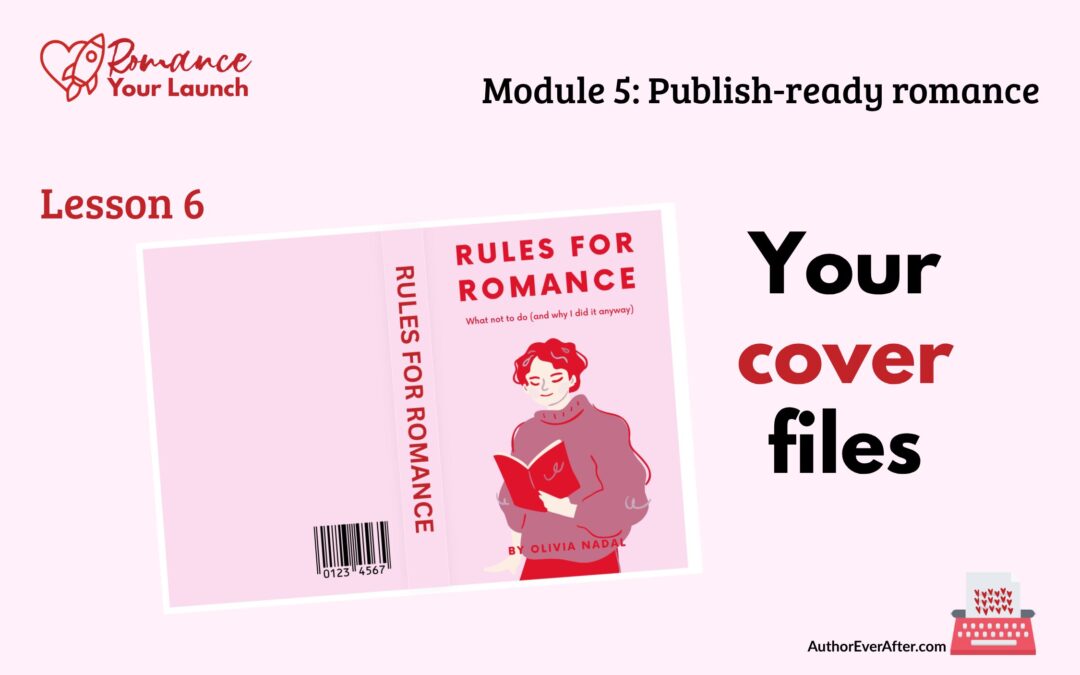
5.6 Book cover file specs for self-publishing authors
Book cover file specs for self-publishing authors Your cover designer has delivered your files. They're beautiful. You love them. You're ready to upload and get this book into the world. Understanding book cover file specs for self-publishing is the one thing standing...
5.5 Formatting check before you publish your romance novel
Your cover is beautiful. But a stunning cover file that fails a platform’s technical requirements can mean reprints, rejected uploads, or colours that shift dramatically between screen and print. Here’s how to get your book cover file specs right before anything goes live.
5.4 How to format a romance novel for self-publishing
Good formatting is invisible. Bad formatting costs you reviews you didn’t see coming. Here’s how to format a romance novel for self-publishing so your pages disappear and your readers stay in the story.
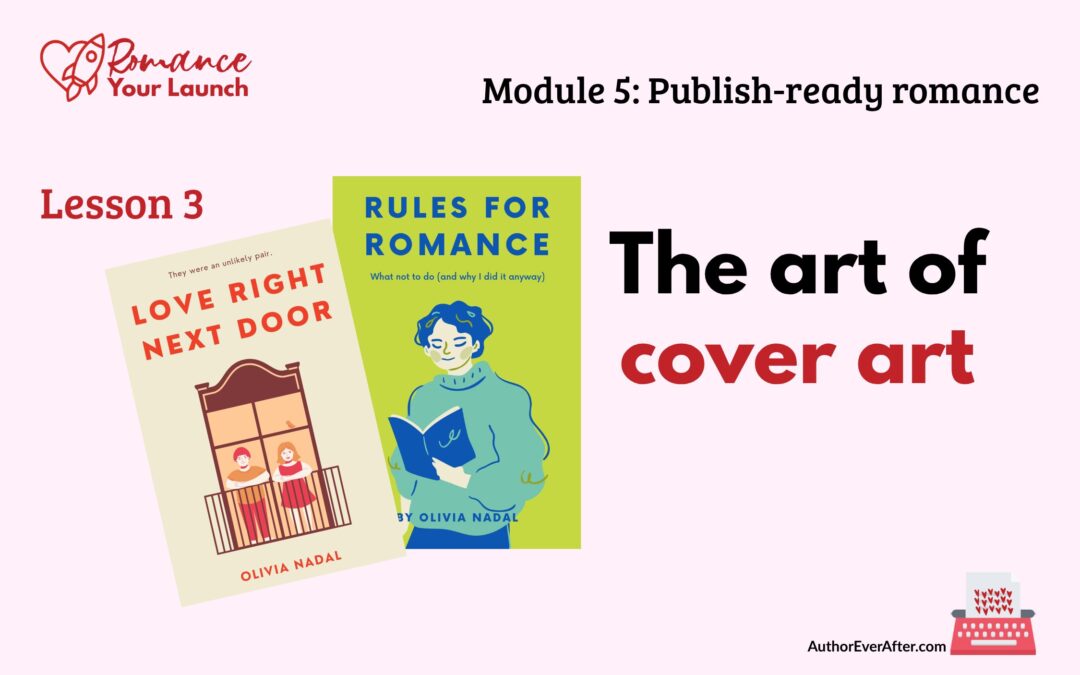
5.3 Romance book cover design guide for indie authors
Your feelings about what looks beautiful are almost beside the point. A romance cover is a signal, not self-expression. This romance book cover design guide shows you exactly what that signal needs to say and how to say it.

5.2 ISBNs for self-published authors: what you need to know
Before you upload your manuscript anywhere, you need to make one decision that affects every version of your book and every platform it lives on. Here’s what to know about ISBNs for self-published authors before you hit publish.
All lessons in this module
1.1 Self‑publishing romance novels: your real opportunities
1.2 Popular romance sub-genres and the readers who love them
1.3 Identify your romance author niche and target audience
1.4 Romance reader expectations and market trends in 2026
1.5 Self‑publishing vs traditional publishing in the romance genre
Ready for the next module?
Go back to the Romance Your Launch home page to see all the modules and links to their hub pages.
Want the next lesson in your inbox?
This post is part of the Romance Your Launch series—a lesson-by-lesson guide to self-publishing your romance novel, written for pre-published and early career romance authors.
.
—> Click this link, drop in your name and email address, and I’ll send you two to three lessons a week, starting with Lesson 1.
.
—> If you’d rather just pick up where the series is, join my regular email list from this link.
** If you join from both links, you’ll get duplicate emails. If that happens and you’d like to stop one of them, hit reply to my email and tell me which delivery schedule you’d like to stay on so I can remove you from the other one. If you unsubscribe yourself, you’ll actually be removed from my entire list and won’t get any emails from me at all. ☹️