

Popular romance sub-genres and the readers who love them
There’s something that trips up a lot of new romance authors: they think they write “romance.” Full stop. And yes, technically that’s true. But when a reader goes looking for her next book, she doesn’t search for “romance.” She searches for “grumpy small‑town cowboy,” “dark mafia anti‑hero,” or “second chance Regency romance.” She’s looking for a very specific feeling. Your job is to know exactly which feeling your book delivers, choose the right sub‑genre label, and signal it clearly from your cover to your blurb, your categories, and your opening chapter.
Why sub-genre knowledge is a business decision
I know what you might be thinking: I just want to tell my story. Fair. I’m not asking you to compromise your story. I’m asking you to know its address in the romance market because that address is where your readers live, and you need to be able to find them.
Sub-genre knowledge is the foundation of your metadata (your categories and keywords on Amazon), your cover design decisions, your comp author research, and your marketing copy. Every one of those things comes back to the same question: what kind of romance did you write?
Let’s tour the romance neighbourhood.
The major sub-genres
Contemporary romance
is the biggest tent in the romance world. It encompasses any love story set in the present day without paranormal or fantasy elements. And within that tent, you’ll find small-town, sports romance, romantic comedy, billionaire, age-gap, single parent, workplace, later-in-life, and more. If your book is set in today’s world and your characters are fully human, you’re in this category.
Contemporary romance readers are often the most voracious in the genre. They consume books quickly, follow series loyally, and are extremely active on BookTok and Goodreads. The sub-genre is competitive, but it’s competitive because the readership is enormous. There’s room in it for authors who know who their specific reader is and write directly to that reader.
Historical romance
transports readers to the past, with Regency England being the most popular setting by a significant margin. Think Bridgerton and its devoted fanbase, and you’ll have a sense of that readership’s appetite. But historical romance is bigger than Regency: American West, Viking, Medieval, and World War II settings all have passionate audiences. Historical romance readers tend to be well-read in the genre and have strong opinions about historical accuracy. They reward authors who do the research and will absolutely mention it in reviews if you don’t. Respect their intelligence and they will love you for a long time.
Paranormal romance
sits at the intersection of contemporary fiction and the supernatural. Think our world, but with magic layered in. Your male main character is more likely to be a werewolf or a vampire than a dragon, and the setting is usually recognisable: a city, a small town, a world that looks like ours until it doesn’t. Paranormal romance was massive in the early 2010s, dipped for a while, and has made a strong comeback in recent years. If this is your sub-genre, your reader tends to skew a little older than the fantasy romance crowd, she’s deeply loyal to series, and she came up reading Twilight or Kresley Cole and never really left.
Fantasy romance
lives in worlds that don’t exist. High fantasy settings, epic world-building, magic systems, non-human species, and MMCs who are far more likely to have wings or scales than a pulse in the conventional sense. This is the sub-genre BookTok fell hard for, driven largely by the ACOTAR series by Sarah J. Maas, which introduced a whole new generation of readers to the genre and created a reader base that is enthusiastic, community-oriented, and voracious for more. Your reader here tends to skew younger (18–35), she invests deeply in fictional worlds, and she expects a series, not a standalone. The distinction between paranormal and fantasy romance is blurrier than the labels suggest, but if your MMC has a dragon, you’re probably in fantasy romance territory.
Romantic comedy
is exactly what it sounds like: romance with a strong comedic element. These stories are lighter in tone, rely heavily on witty dialogue and humorous situations, and make you laugh out loud before they make you feel things unexpectedly. RomCom readers are savvy about tropes and can spot a forced conflict from a mile away. They will mention it in reviews. But when you nail a RomCom, those readers recommend it to everyone they know. The word-of-mouth potential in this sub-genre is real.
Dark romance
is one of the fastest-growing sub-genres in indie publishing. These stories explore morally complex or outright villainous love interests—anti-heroes, captivity plots, morally dark scenarios, mafia, bratva, dark academia, gothic settings. The readers of dark romance are sophisticated genre consumers who know exactly what they’re signing up for and don’t want to be surprised. Clear content warnings are not optional in this space: they’re a sign of professionalism and respect, and your readers will expect them.
Romantic suspense
blends romance with thriller or mystery elements. There’s a love story and there’s someone trying to solve a crime, survive a threat, or outrun danger. For this to work well, the romance and the suspense need to be genuinely equally weighted. Readers will feel it if one is serving the other rather than running alongside it. Romantic suspense readers skew slightly older than some other sub-genres and often also read mystery and thriller. They want the emotional payoff of a guaranteed HEA alongside their plot twists.
Inspirational romance
(also called clean or sweet romance) features little to no sexual content and often, though not always, includes faith-based elements. This is a significant and genuinely underserved market. There are millions of readers who want emotionally satisfying, swoony love stories with closed bedroom doors, and they are passionate advocates for the authors who serve them well. The Hallmark movie audience is a large slice of your inspirational romance readership and that audience is not small.
Later-in-life romance
(sometimes called seasoned romance) features protagonists over 40, often over 50. Second marriages, adult children, complicated pasts, and the particular emotional texture of falling in love when you’ve already lived a full life. It’s a growing sub-genre with an underserved readership that is genuinely hungry for stories that reflect where they are. If your characters are in this age range, own it proudly in your marketing.
Tropes: the shorthand your readers use to find you
Within every sub-genre lives a universe of tropes, the recurring story patterns that readers actively seek out. Enemies to lovers. Forced proximity. Grumpy/sunshine. Fake dating. Second chance. Forbidden love. Small-town return. Single parent. Age gap. Brother’s best friend.
Tropes are a promise. When a reader picks up an enemies-to-lovers story, she knows the emotional arc she’s signing up for and she’s trusting you to deliver it in a fresh, satisfying way. Knowing the tropes in your book is as important as knowing your sub-genre, because readers search for both.
A quick way to see this in action: go to Amazon and look at the subtitle field of popular romance books in your sub-genre. You’ll often see something like A steamy small-town single-dad romance or An enemies-to-lovers fake-dating rom-com. That’s the author packaging their tropes directly into the product listing, because readers are scanning for exactly that language.
Heat levels: your book’s temperature matters
One more thing you need to know how to communicate clearly: heat level. Romance runs a spectrum from sweet (no on-page intimacy) all the way to erotic, with explicit, detailed content. Most steamy contemporary romance falls somewhere in the middle, sensual and definitely on-page, but not erotica.
Your heat level often shapes your cover design, informs your categories, sets reader expectations, and defines your Amazon content settings. We’ll go deeper on this in Lesson 4, but keep it in mind as you start placing your book in its sub-genre home. A mismatch between your book’s heat level and the signals your cover and blurb are sending is one of the most common and fixable reasons a romance book underperforms with its intended reader.
Placing your book in the market
The romance genre is vast, and there is a devoted readership for every corner of it, including whatever specific corner your story lives in. Knowing your sub-genre isn’t about putting yourself in a box. It’s about building a door so the right readers can find their way in.
Get every lesson in the Romance Your Launch course
—> Click this link and I’ll send you two to three lessons a week, starting with Lesson 1.
—>Or, join my regular email list if you’d rather just pick up from the current lesson.
This lesson is part of Module 1: Understanding the romance market in the Romance Your Launch program.
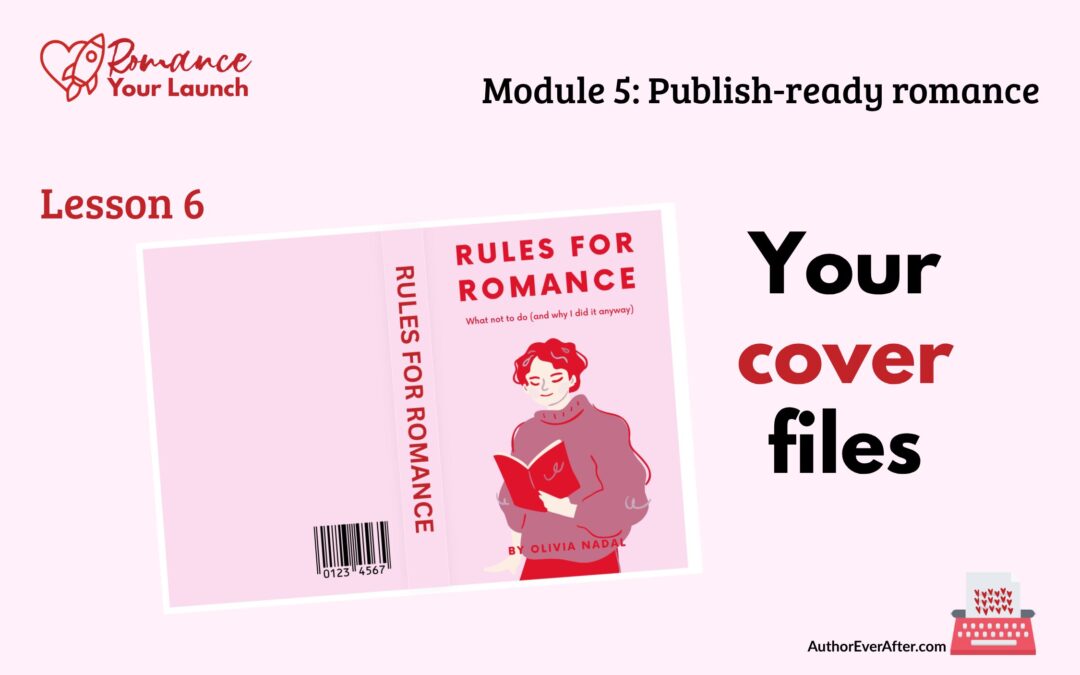
5.6 Book cover file specs for self-publishing authors
Book cover file specs for self-publishing authors Your cover designer has delivered your files. They're beautiful. You love them. You're ready to upload and get this book into the world. Understanding book cover file specs for self-publishing is the one thing standing...
5.5 Formatting check before you publish your romance novel
Your cover is beautiful. But a stunning cover file that fails a platform’s technical requirements can mean reprints, rejected uploads, or colours that shift dramatically between screen and print. Here’s how to get your book cover file specs right before anything goes live.
5.4 How to format a romance novel for self-publishing
Good formatting is invisible. Bad formatting costs you reviews you didn’t see coming. Here’s how to format a romance novel for self-publishing so your pages disappear and your readers stay in the story.
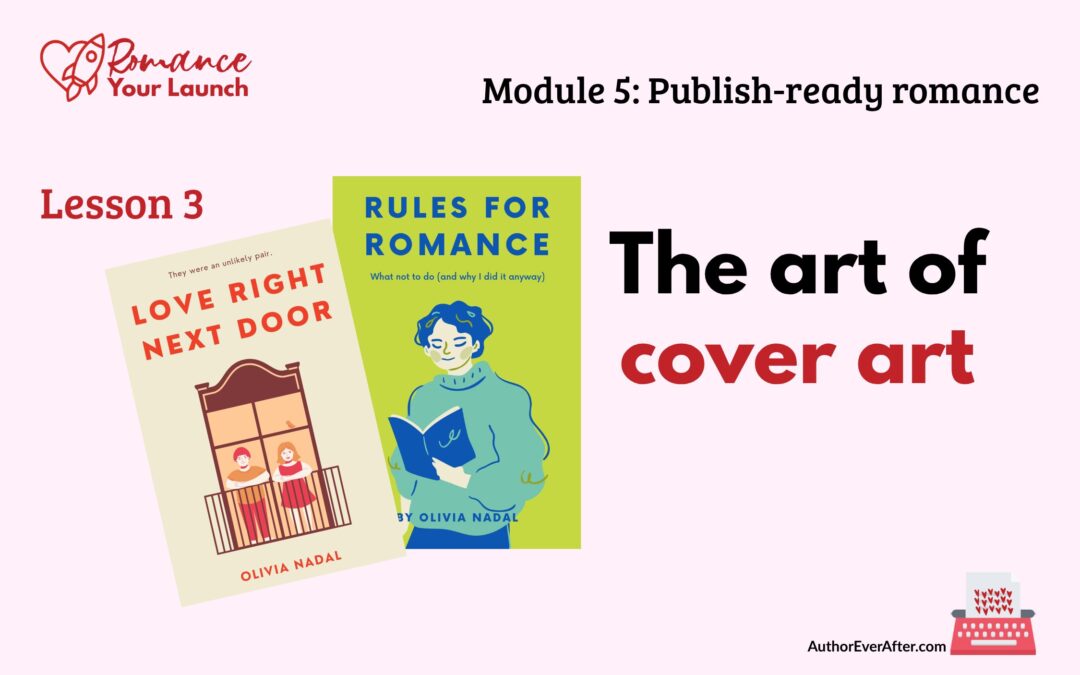
5.3 Romance book cover design guide for indie authors
Your feelings about what looks beautiful are almost beside the point. A romance cover is a signal, not self-expression. This romance book cover design guide shows you exactly what that signal needs to say and how to say it.

5.2 ISBNs for self-published authors: what you need to know
Before you upload your manuscript anywhere, you need to make one decision that affects every version of your book and every platform it lives on. Here’s what to know about ISBNs for self-published authors before you hit publish.
All lessons in this module
1.1 Self‑publishing romance novels: your real opportunities
1.2 Popular romance sub-genres and the readers who love them
1.3 Identify your romance author niche and target audience
1.4 Romance reader expectations and market trends in 2026
1.5 Self‑publishing vs traditional publishing in the romance genre
Ready for the next module?
Go back to the Romance Your Launch home page to see all the modules and links to their hub pages.
Want the next lesson in your inbox?
This post is part of the Romance Your Launch series—a lesson-by-lesson guide to self-publishing your romance novel, written for pre-published and early career romance authors.
.
—> Click this link, drop in your name and email address, and I’ll send you two to three lessons a week, starting with Lesson 1.
.
—> If you’d rather just pick up where the series is, join my regular email list from this link.
** If you join from both links, you’ll get duplicate emails. If that happens and you’d like to stop one of them, hit reply to my email and tell me which delivery schedule you’d like to stay on so I can remove you from the other one. If you unsubscribe yourself, you’ll actually be removed from my entire list and won’t get any emails from me at all. ☹️