
Scene level edit for a romance novel that readers actually feel
The structural edit asked whether your story works; the scene level edit for a romance novel asks whether your story feels. You’ve fixed the bones: the romance arc is present, the beats are in the right order, the character arcs are doing their jobs, and the structure can hold the weight of the love story you’re telling. Now you move inside each scene and ask a different, more granular question:
Does this scene earn its place on the page.
Not “does this scene exist?” Of course it exists. You wrote it. The question is whether each scene is doing enough, whether the reader experiences it or just witnesses it, whether the emotional moments land or get summarised from a safe distance. The scene level edit is where a structurally sound draft becomes a story readers feel in their bodies.
You are still not polishing sentences; that’s the line edit. Here, you’re deciding what each scene is for and whether it is actually doing that job.
Every scene needs a job
The most useful question you can ask at this stage is the simplest one:
What changes by the end of this scene?
Not “what happens,” because things can happen without anything truly changing. What changes?
- Something in the plot: a decision gets made, a secret comes out, a new problem shows up.
- Something in the relationship: trust deepens, tension escalates, one of them takes a step toward the other or a step back.
If the honest answer is “not much,” you have three options.
- You can fold the one important detail into a different, stronger scene and let this one go.
- You can sharpen the conflict or emotional turn so that something real changes.
- Or you can cut it and trust that the story is better for it, even if your inner completist is twitching.
Scenes where nothing dramatic happens on the surface but the reader’s understanding of a character deepens, a later conflict is set up, or a necessary emotional beat lands are absolutely fine. Quiet scenes just need to feel essential. The test is the same:
If you removed this scene, what specific piece of the story would be missing?
If the answer is genuinely “nothing,” the scene is a cut.
Dialogue and interaction: where romance lives on the page
The scene level edit for a romance novel is where you make conversations actually carry the romance. Not conversations that summarise emotion. Conversations that create it in real time in the reader’s body.
Go through the key scenes where your couple banters, fights, flirts, reveals something true, or makes a decision together. For each one, ask whether the dialogue sounds like these people. It should be shaped by their age, background, wounds, and the specific dynamic they have with each other, not like generic romance characters who could be dropped into any book in the sub‑genre.
Then ask if there’s tension under the surface: subtext, things left unsaid, sentences that trail off, defences that go up at the wrong moment. The most charged romantic dialogue is rarely the version where characters say exactly what they mean.
Look at whether body language and action are doing their share of the work. “Talking heads” scenes where characters speak, react, and speak again without any physical reality around them flatten intimacy even when the words are good. A character who leans away when she wants to lean in, who rearranges objects on a table to avoid eye contact, who laughs a beat too late: that’s the scene telling us something the dialogue will not say directly. One or two sharp, specific physical beats in a key scene can do more for the emotional charge than a paragraph of internal monologue.
You’re building toward scenes where the reader feels the connection and the tension in real time, not scenes where she’s informed that the characters argued or flirted and asked to take it on faith.
Emotional impact: stop summarising, start dramatising
Romance readers come for the feelings. Not just the events, the feelings. One of the most common ways a romance draft loses its grip on a reader is by summarising emotional moments instead of dramatising them.
“She was devastated.” “He felt something shift.” “It hit her all at once.” These are told emotions, perfectly accurate descriptions of what a character is experiencing, delivered from the outside. They can work in quick transitions. They become a problem when they stand in for the actual experience of a significant emotional moment.
Look especially closely at the firsts: the first real spark, the first kiss, the first genuine conflict, the first moment of real vulnerability. Look at the fallout from big choices: the scenes immediately after something irreversible happens. These are the moments readers came for, and they are also the moments most likely to get summarised in a draft because they were intense to write. Slow down in them.
Give the POV character’s body something to do: a physical sensation, a small involuntary reaction, the specific way time seems to bend or stretch. Layer in the thought underneath the thought, the thing the character almost admits before she pulls back. The goal is not to inflate every scene into a five‑page excavation. The goal is to spot the moments that matter most to the love story and make sure they are fully present, before and after as well as during. A key emotional beat needs a clear before and after: how does this scene change what the character believes, wants, or is willing to risk.
Sensory detail: moving readers from understanding to experiencing
There is a difference between a reader who understands what is happening in a scene and a reader who feels like she is in the room. Sensory detail is what moves her from the first to the second, and in romance, where physical and emotional intimacy are so tightly linked, that difference matters.
For your most important scenes, check whether you have grounded the reader in where she is. You do not need a catalogue of every object in the room, but you do need enough: the quality of the light, the ambient sound, the temperature, the way the space feels between these two people right now. Check whether you are using more than one sense. Sight is the default, but sound, touch, and smell often land harder in charged moments: the squeak of barstools during a tense conversation, the sting of winter air as they argue in a parking lot, the smell of vanilla and coffee in the scene where she finally lets her guard down.
Let characters interact with their environment in ways that reveal their inner state. Wiping sweaty palms on jeans. Lingering over a mug they are not actually drinking from. Turning to look out a window at nothing. These small physical actions do two things at once: they anchor the scene in a real, physical world and show the reader something about the character’s emotional state that the sentences do not have to spell out. You are not building a sensory buffet in every paragraph. You are adding one or two specific details to the right scenes in the right places to make them feel vivid without bogging the pace.
How to work through a scene level pass without burning out
A manuscript has a lot of scenes. Trying to do equally deep work on every single one in one go is a fast route to exhaustion and stalled revision. Give yourself a triage pass first.
Read through with a simple rating in mind:
- scenes that are absolutely essential and already working,
- scenes that are probably needed but could be stronger,
- scenes that are genuinely questionable.
The third category is your cut‑or‑combine list. Hold those scenes lightly. The first two categories are where your deep scene work lives.
For each scene you’re actually revising, ask yourself four questions:
- What is this scene’s purpose?
- How does it move the plot or the relationship?
- What is the key emotion here?
- What one or two changes would make it hit harder?
Answering those questions before you start revising means you are working with intention instead of just tinkering.
Give yourself a limit of two focused passes per scene, then move on. If an idea pops into your head that belongs to the line edit, park it in a separate note and keep going. This pass is for purpose and emotional impact. The sentences will get their turn.
Where the scene level edit ends
The scene level edit for a romance novel is finished when you can read through the manuscript and feel that almost every scene is earning its place. Each scene is present in the right form, doing its job for the overall story and the love story, and landing its emotional moments with enough weight that a reader would actually feel them.
When you’re there, you’re ready for the line edit, where the work becomes more precise and, for many people, more pleasurable. That’s where you focus on clarity, word choice, rhythm, and all the micro‑level choices that turn a strong scene into smooth, immersive story that readers get lost in. The writing shines there only because the scene level edit has made sure it’s worth shining.
Key takeaway
The scene level edit for a romance novel is where you stop asking “Does this book work in theory?” and start asking “Does each moment actually land for a reader who loves this trope?” When you give every scene a job, lean on specific dialogue, emotion, and sensory detail, and then triage which scenes deserve your deepest focus, you turn a solid story into a romance readers feel every step of the way.
Join Author Ever After
You’ll get immediate and full access to the Romance Your Launch program (all 11 modules), a worksheet for every lesson, plus three weekly, small group support meetings to answer all your questions, and a freaking amazing community of pre-published and early career romance authors who are building their indie publishing careers alongside you.
Get more details about the community here.
Or, go straight to the application form.
Get every lesson in the Romance Your Launch course
—> Click this link and I’ll send you two to three lessons a week, starting with Lesson 1.
—>Or, join my regular email list if you’d rather just pick up from the current lesson.
This lesson is part of Module 4: Revise & shine in the Romance Your Launch program.
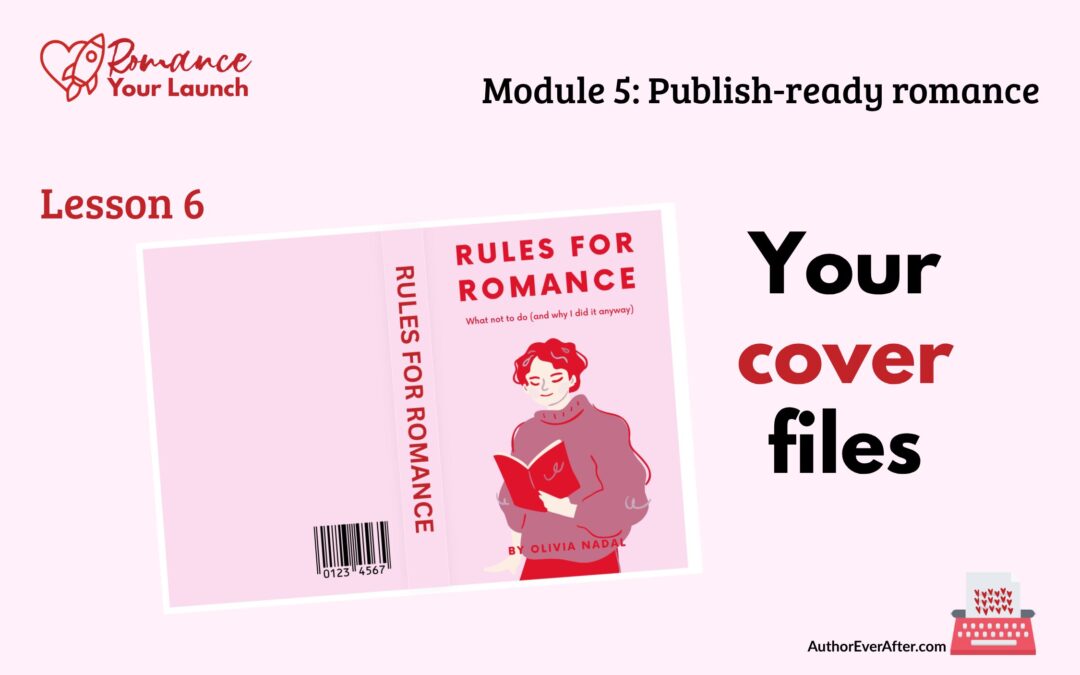
5.6 Book cover file specs for self-publishing authors
Book cover file specs for self-publishing authors Your cover designer has delivered your files. They're beautiful. You love them. You're ready to upload and get this book into the world. Understanding book cover file specs for self-publishing is the one thing standing...
5.5 Formatting check before you publish your romance novel
Your cover is beautiful. But a stunning cover file that fails a platform’s technical requirements can mean reprints, rejected uploads, or colours that shift dramatically between screen and print. Here’s how to get your book cover file specs right before anything goes live.
5.4 How to format a romance novel for self-publishing
Good formatting is invisible. Bad formatting costs you reviews you didn’t see coming. Here’s how to format a romance novel for self-publishing so your pages disappear and your readers stay in the story.
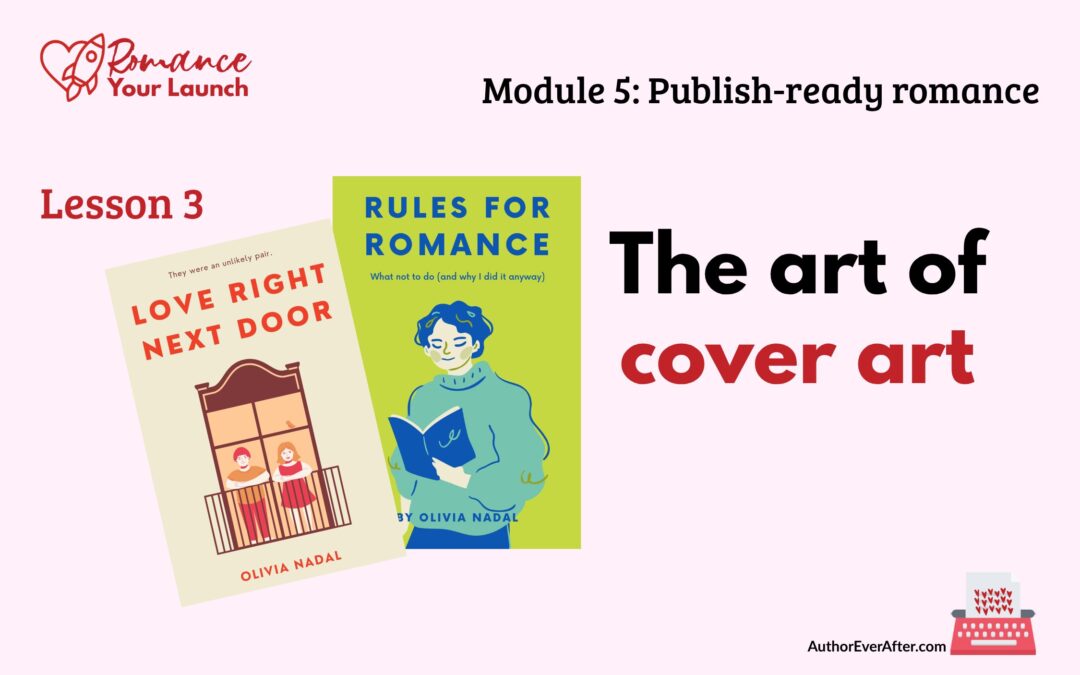
5.3 Romance book cover design guide for indie authors
Your feelings about what looks beautiful are almost beside the point. A romance cover is a signal, not self-expression. This romance book cover design guide shows you exactly what that signal needs to say and how to say it.

5.2 ISBNs for self-published authors: what you need to know
Before you upload your manuscript anywhere, you need to make one decision that affects every version of your book and every platform it lives on. Here’s what to know about ISBNs for self-published authors before you hit publish.

5.1 Romance novel metadata tips for self-published authors
Your book deserves to be found. But even a great romance novel stays invisible if your metadata isn’t doing its job. These romance novel metadata tips for self-published authors will help you get it right before you hit publish.
4.6 Final manuscript review before publishing your romance
“Almost there” is where a lot of authors stall out. In this lesson, you’ll walk through a final manuscript review before publishing so you can read like a reader, catch small issues that break immersion, and finally feel confident calling your romance done.

4.5 Line edit for a romance novel that feels polished
The line edit is where your romance stops feeling like a draft and starts feeling like a book. In this lesson, you’ll learn how to make your sentences clearer, sharper, and more intentional—without turning your voice into bland, beige prose.

4.3 Structural edit for a romance novel that actually works
A structural edit is where you stop fussing over sentences and zoom all the way out to your romance as a whole. In this lesson, you’ll learn how to read your draft for structure, map the romance arc, and spot the big changes that will make everything you revise next actually worth the effort.

4.2 Beta readers for romance authors who want better books
Before you sink weeks into polishing sentences, you need to know if the story actually works for anyone who isn’t you. In this lesson, you’ll learn how to find and brief beta readers for romance authors so you get targeted, story-level feedback that makes revision easier instead of overwhelming.
4.1 Self-editing tips for romance authors who want readers
Self-editing is not a punishment for an imperfect draft; it’s how you give your romance a second life with a clearer head and a sharper eye. In this lesson, you’ll set yourself up with mindset, tools, and support so your edits actually help you reach more readers.
3.5 Social media strategy for romance authors
You do not need to be everywhere online to sell romance. In this lesson, you’ll choose one platform, decide what you actually want social media to do for your career, and build a sustainable posting rhythm that turns curiosity into clicks on your lead magnet.
3.4 Simple romance author websites
Your author website doesn’t have to impress anyone. It has to exist and give readers one clear place to go. In this lesson, you’ll pick an easy platform, claim your URL, write your copy, and build a simple, on‑brand home that points straight to your books and your list.
3.3 Email list setup for romance authors
Followers belong to the platform. Your list belongs to you. In this lesson, you’ll connect your lead magnet to a clean email setup and draft a four‑email welcome sequence so every new romance reader is welcomed, warmed up, and ready when you launch your book.
3.2 Romance lead magnet ideas to grow your email list
Your lead magnet is not a throwaway freebie. It is often the first story a new reader ever sees from you. In this lesson, you’ll choose the right format, length, and emotional promise for your romance lead magnet so it attracts the readers who will go on to buy your books.
Need to go back to a previous lesson?
Return to Module 4: Revise & Shine to see all six lessons.
Or go back to the Romance Your Launch home page to see all the modules and links to their hub pages.
Want the next lesson in your inbox?
This post is part of the Romance Your Launch series—a lesson-by-lesson guide to self-publishing your romance novel, written for pre-published and early career romance authors.
.
—> Click this link, drop in your name and email address, and I’ll send you two to three lessons a week, starting with Lesson 1.
.
—> If you’d rather just pick up where the series is, join my regular email list from this link.